The year is 1989. Around the world, times of change are underway, typical of a decade that will end with a new global geopolitical order, greater economic openness, and a clear path for the golden years of entertainment. It is in this intergenerational limbo, anticipating a decade of culture, fun, and authenticity, that the singer Jorge Palma brings malt to the spotlight—the ingredient in his whisky that, the song says, tastes bitter to him.
(But we’ll get to the Portuguese musician shortly.)
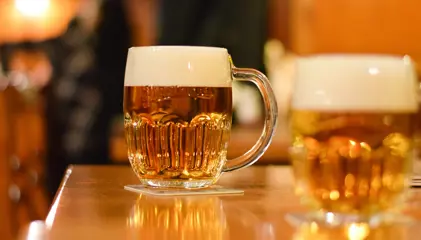
Malt is one of the three ingredients shared between whisky and beer—the other two are water and yeast. In beer, malt holds the secret to many of the flavor differences across beer styles, as well as the eclectic palette of colors found in this universe: from pale Pilsners and Pale Ales to darker varieties like Porter and Stout.
Barley: the dominant cereal, but not the only one
Simply put, malt is nothing more than cereal grains that have undergone a malting process. Controlled germination allows the grains to sprout to a certain point, at which point the process is abruptly stopped.
If you asked a group of people which cereal is used in beer, almost everyone would say barley. While not entirely accurate, it’s very close to the truth. Although it’s not the only cereal used, barley is by far the most widely employed. Here are a few reasons why brewers favor it:
The outer husk protects the barley during malting.
It’s rich in diastatic enzymes, which convert starch into sugars during mashing (the process of cooking a mixture of malted grains with water). In fact, malt is so rich in these enzymes that it can even convert starch from other grains.
Its low protein content improves beer clarity and facilitates wort filtration.
It has few lipids, which could negatively affect the foam in the finished beer.
DID YOU KNOW...
The Super Bock Group established its own malt house. Maltibérica began operating in 1992, ensuring national malt production of high quality and quantity, with competitive costs that supply not only the Super Bock Group but also the national market and even exports. By signing purchase contracts with local barley producers, the company reinforces its commitment to Portuguese farmers.
Besides barley, cereals like wheat, rye, and oats are also used to produce malt for beer. Wheat malt is especially known for German styles like Bavarian Weissbier or Berliner Weisse. Rye and oat malts have gained popularity in craft beers for the creamy texture they provide.
These cereals, however, don’t have as strong diastatic power as barley, so they are usually blended with the “queen of malts.”
A brief introduction to malting fundamentals
Before grains can grow, take root, and perform photosynthesis, the first nutrients they need are inside the kernels. Brewers rely on these nutrients to craft their beers.
The problem is that these nutrients are tightly packed and insoluble, making brewing impossible. Malting solves this: grains are encouraged to germinate to an ideal point, after which germination is stopped. The malting process generally involves three steps (though some specialty malts, like caramel malt, have slight variations): steeping, germination, and kilning.
During steeping, grains are soaked and drained alternately for about two days. When small roots begin to appear, they move to the germination floor. Here, grains are aerated for four to six days, breaking down internal bonds that made the grain rigid, making nutrients soluble. At the end of this stage, “green malt” has 40–50% moisture. Kilning stops germination: grains are dried at 80–90°C until moisture drops to 3–6%.
Malt for every taste
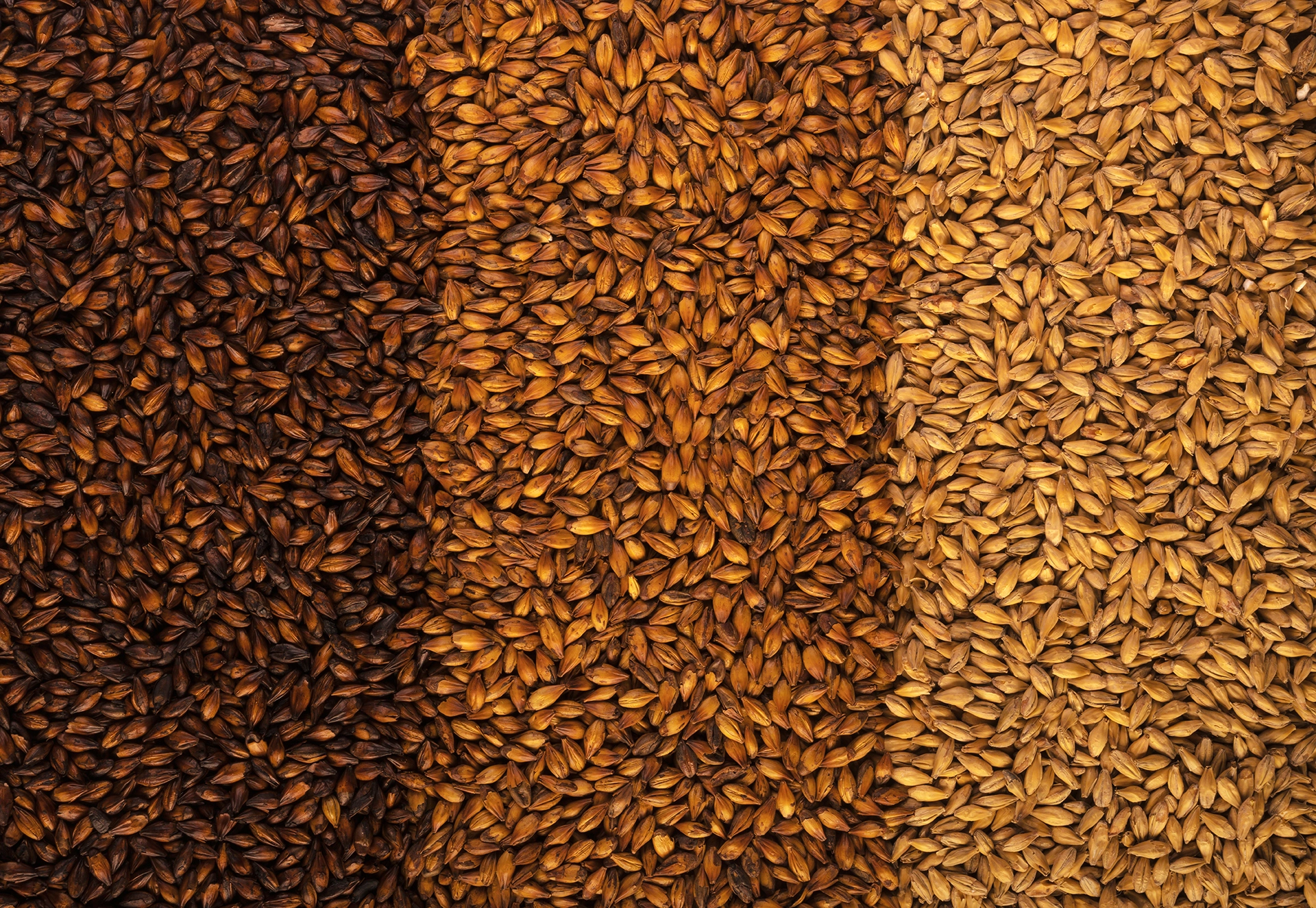
Differences in malting, such as heat intensity and duration, influence the type of malt and the resulting beer. Lightly roasted malts yield pale beers, while darker malts produce darker beers. Getting to Know the Different Types of Malt
Base malts
These light-colored malts make up 60–100% of the beer, with the remainder from specialty malts or unmalted grains. Base malts have the best enzymatic power to convert starch into fermentable sugars, which yeast later turns into alcohol and CO₂. The darker the malt, the lower its enzymatic power due to heat damage, which is why even dark beers mostly use base malts, supplemented by roasted malts for color and flavor.
Common base malts include Pilsner, Pale Ale, wheat malt, and sometimes Vienna and Munich malts. Munich malt, despite its darker color, retains enzyme activity due to its unique malting process. It originated in Bavaria in 1830; the first beer brewed with it was Märzen in 1841.
Roasted malts
As the name suggests, these malts are roasted at high temperatures, contributing unique colors, flavors, and aromas—from caramel and biscuit to nuts, chocolate, and coffee. Their enzymatic power is low, so they mostly enhance sensory qualities rather than fermentation.
There are two categories:
Green roasted malts, including caramel malt, which adds sweetness and aids foam formation. Popular in American Amber Ale and Red Ale.
Dry roasted malts, like brown, chocolate, black, or biscuit malt. Brown malt appears in British ales like Stout, Porter, and Scotch Ale. Chocolate malt gives roasted coffee notes in Porter, Stout, Brown Ale, Scotch Ale, and Dunkel. Black malt provides strong coffee flavors in Stouts. Biscuit malt, newer in production, adds aromas of fresh bread, biscuit, and nuts, popular in Brown Ales.
Aromatic malts
These specialty malts, exposed to higher temperatures during drying, enhance malt flavor and aroma. They are related to darker Munich malt and used in Bocks, Brown Ales, or Munich Dunkel.
The world of malt is vast and diverse, forming the foundation of what makes a beer special. Some even recall whisky, as smoked malts used in whisky are also present in Scotch Ales.
As Jorge Palma sings in Frágil, if malt whisky tastes bitter, there’s always beer. With malt, of course.