
All over the world, rivalries exist between cities, towns, sports clubs, festivals, traditions, or even economic sectors, and a good way to settle these disputes—more or less healthily—is in a café or bar, toasting with a beer. When it comes to Cologne and Düsseldorf, the two main cities of the German state of Rhineland, this option doesn’t apply. The problem? Each city has its own beer style, which competes not only with the style of the other city but also with the neighboring Pilsner. So let us toast to the friendly rivalry between Altbier and Kölsch, the beers of Düsseldorf and Cologne.
History
Although the versions of Altbier and Kölsch that we know today are just over a century old, both styles are ancient and date back to the Middle Ages. Originating from Cologne, the oldest version of Kölsch dates back to the year 874, and its production has been strictly regulated since 1250. Altbier, on the other hand, evolved from the traditional ales of northern Germany, typical of that region during the Middle Ages. These were strong, hoppy beers, with a wheat malt content reaching up to 40%. Beyond their gastronomic significance, these medieval beers were also economically important, serving as a form of currency within the Hanseatic League, a network of cities that at the time held a commercial monopoly in northern Europe.
From the Threat of Pilsner to Modern Versions
After evolving for centuries in the Düsseldorf region, Altbier earned its name from its age: “Alt” in German means “Old.” This designation reflects the tradition of this beer, which predates even the lagers—bottom-fermented beers that were becoming increasingly important in the German and European brewing scene. The name Altbier also reflects the threat posed by this “new beer,” which was transported by rail from Bavaria and Bohemia.
Interestingly, modern Kölsch is also linked to the Pilsner style, which in the 19th century was imported from Bohemia to local markets. To respond to the growing success of the pale lager produced in what is now the Czech Republic, brewers in Cologne created a golden, hoppy pale beer, while still using top-fermentation yeast. Thus was born Kölsch, which we enjoy drinking today.
Ingredients
Given their specific characteristics, both styles use ingredients native to the Rhineland—traditional German hops and pale or Pils malt in the case of Kölsch; and base German malts (Pils or Munich) in Altbier.
Both styles may include wheat malt, and in the case of Altbier, toasted wheat. The latter is also brewed with small amounts of crystal malt, chocolate, or dark malts to adjust color.
In the Glass
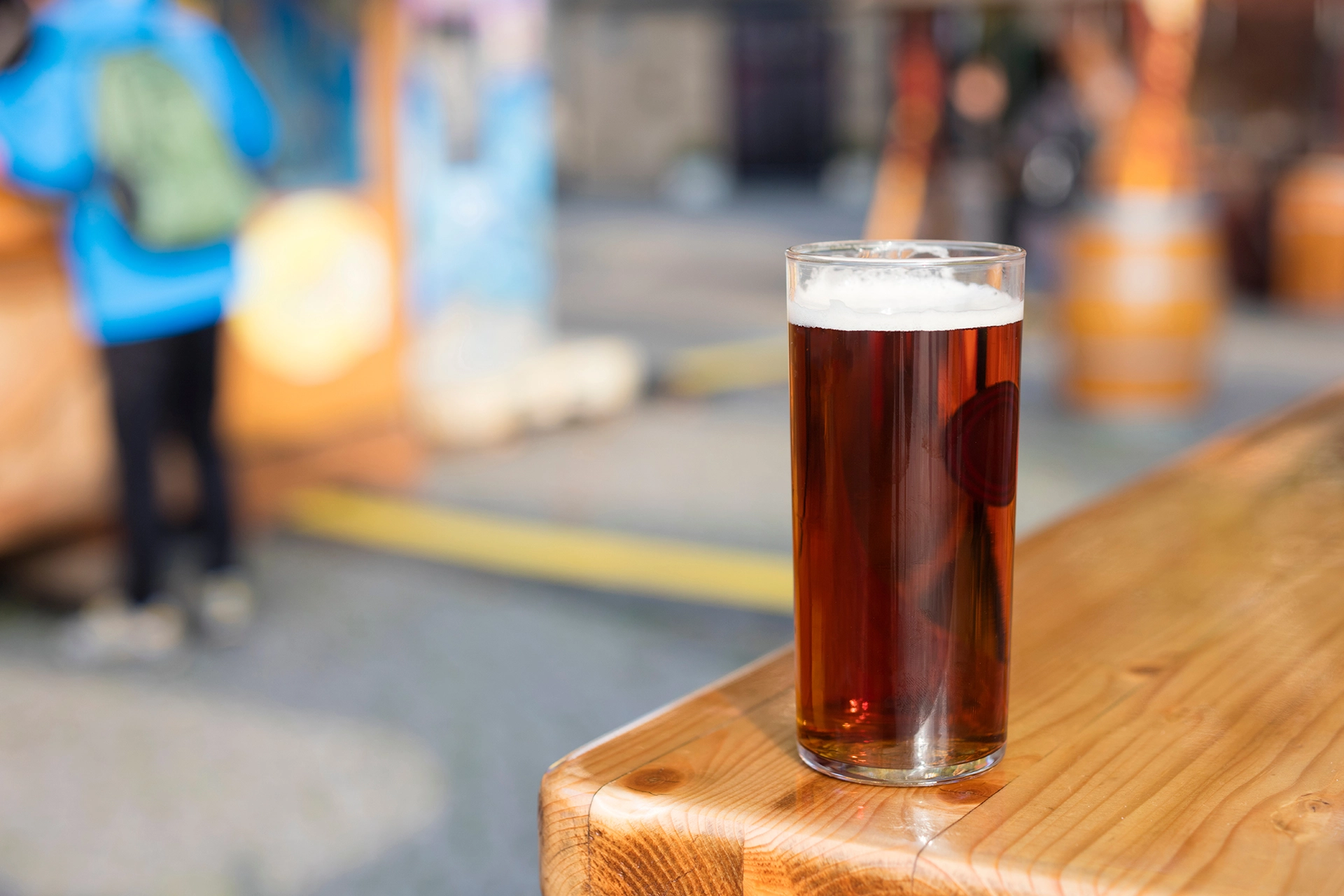
Kölsch is a clear, bright, filtered beer with a delicate white foam. In Cologne bars, Kölsch is served in 20-centiliter Stangen glasses. There’s a reason for this: with such a small quantity in the glass, customers must keep ordering refills, which keeps the beer fresh.
Altbier ranges in color from light amber to deep copper, almost brown. It is a clear and bright beer with thick, creamy, and long-lasting foam.
Aroma and Flavor
Kölsch, due to its smoothness, can easily be mistaken for a Cream Ale or a Pilsner, thanks to the delicate balance between malt and hops. On the nose, the malt aroma is very light, with floral and spicy hop notes also noticeable. On the palate, there is a light to medium hop bitterness that, combined with the malt’s gentle bread-like notes, culminates in a dry, slightly rough finish.
In Altbier, the granulated malt and spicy hop notes stand out more intensely. On the nose, toasted malt character is prominent, with aromas of bread or nuts. Hop intensity can range from low to moderate, presenting spicy, herbal, and floral notes.
On the palate, this bitter, spicy hop flavor is moderate and balanced with a strong, clean malt character. Some toasted malt grain notes may linger, with a semi-dry to dry finish.
Alcohol
Both Kölsch and Altbier are light and refreshing beers, with alcohol content (ABV) typically ranging from 4% to 5.5%.