Maybe dark beer isn’t your first choice. You might think of this style as heavy and overly bitter. If that’s the case, it’s time to learn more about this drink that has evolved so much over the years and now offers a wide variety of flavors, aromas, and alcohol levels. Did you know that not all dark beers are bitter?
Fun Facts About Dark Beer
1. Is Dark Beer Stronger?
Contrary to what many might think, there’s no direct link between a beer’s color—light or dark—and its alcohol content. In fact, many light beers have a higher alcohol level than darker ones.
A beer’s color is mainly defined by how the malt is roasted during production.
The temperature and intensity of the drying and roasting process determine the final shade: the darker the roast, the darker the beer. There are also hundreds of malt varieties, each with its own color profile, ranging from pale gold to amber, reddish, brown, and even black.
DID YOU KNOW?
There’s a device called a spectrophotometer that measures beer color. It led to the creation of two color scales: the EBC (European Brewing Convention) and the SRM (Standard Reference Method) used in the United States.
2. What Are the Main Styles of Dark Beer?
There are countless varieties of dark beer, but it’s easier to understand them by grouping them into “families.” It’s worth noting, however, that each of these has several substyles. Some of the main ones include:
Porter:
The name is tied to its origin in early 18th-century Britain, when it was brewed for the laborers who carried goods at the docks—known as “porters.”
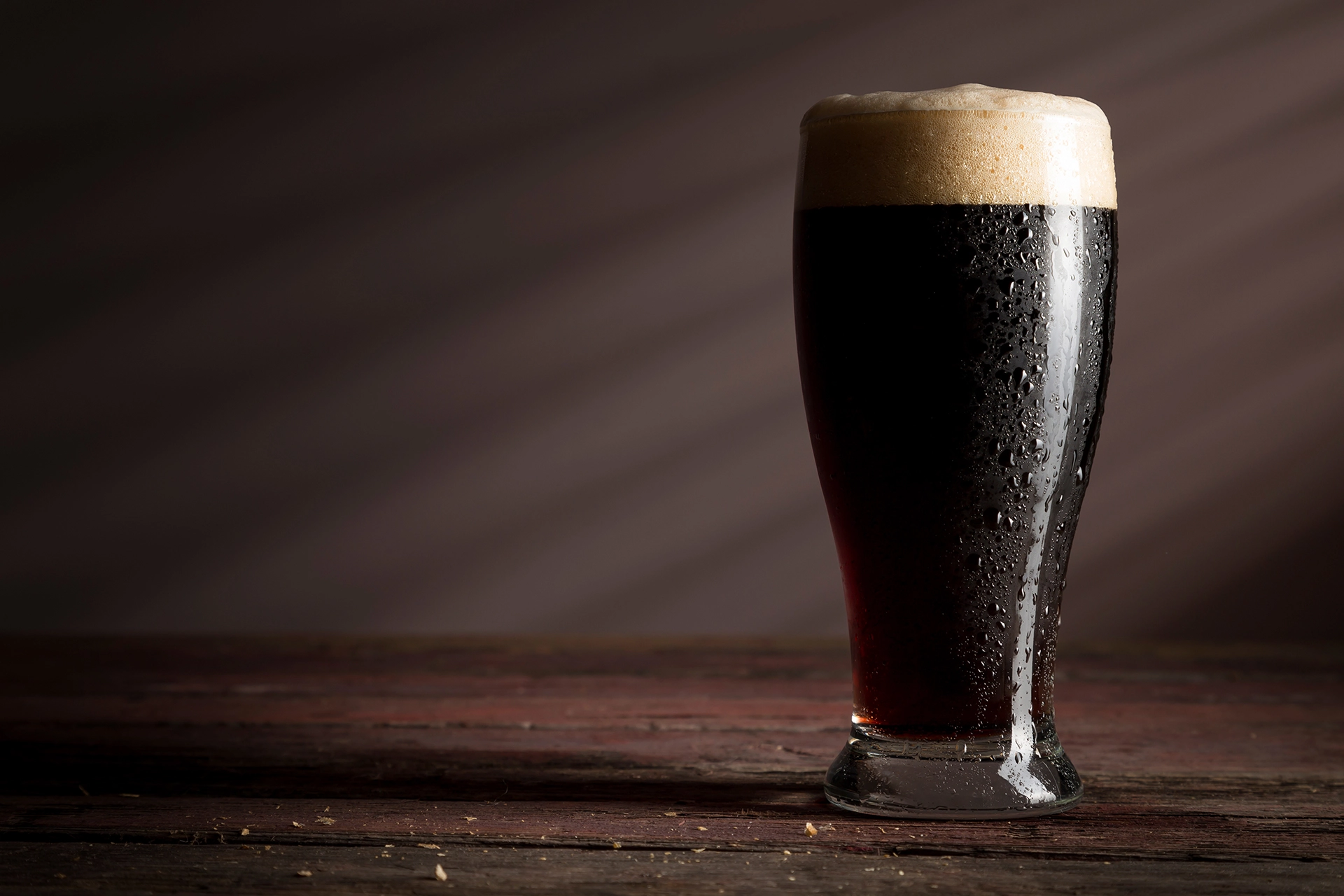
It’s a dark, almost black beer with a bold, slightly bitter flavor. Typically, it has an alcohol content between 4% and 7% and features notes reminiscent of chocolate and coffee.
Stout:
Stout beer emerged in 19th-century England as a way to avoid taxes on malted barley by using roasted, unmalted barley instead.
It’s similar to Porter and historically so closely related that they were once considered the same style. Stouts often have a higher alcohol content, aromas of cocoa or chocolate, and a creamier texture.
Schwarzbier:
In German, Schwarzbier literally means “black beer.”
It’s a full-bodied beer with an opaque dark color and a slightly sweet yet bitter flavor, featuring aromas of roasted malt, coffee, or dark chocolate.
Because of these qualities, it challenges the idea that dark beers are heavy or harsh. Unlike Porters or Stouts, Schwarzbiers are less bitter and tend to be smooth, refreshing, and light while still retaining depth of color and flavor.
Dunkel:
Originating from Munich, Germany, Dunkel beers range in color from copper to deep brown. They have a sweet—but not fruity—aroma, with notes of chocolate and caramel, and a creamy foam.
Some Dunkels are unfiltered, giving them a rich, bready flavor.
According to research from the University of Wisconsin in the United States, cited by Useless Daily, Stout beers contain more antioxidants than other lagers due to the high temperatures reached during the roasting process.
3. Do You Know How to Pair Dark Beer with Food?
Dark beer is incredibly versatile—it pairs beautifully with snacks, main dishes, and even desserts. It complements both simple meals and gourmet dishes.
The secret is choosing the right beer for each type of food. Identify the dish’s strongest flavor or aroma and pair your beer with that element. It also depends on your goal: do you want the beer to cut through intense flavors or complement them?
Here are some pairing suggestions:
Caramelized Roast Pork Loin with Super Bock Seleção 1927 Munich Dunkel:
Strong, flavorful dishes pair best with intense beers, creating a complementary relationship that enhances the meal.
Steamed Oysters with Lemon Butter Sauce and Super Bock Stout:
The ideal beer for oysters should highlight the seafood’s freshness while cleansing the palate of its natural saltiness.
Coffee-Chocolate Truffles with Super Bock Seleção 1927 Thames Porter:
Dark beers made with roasted malt share similar roasted flavors to coffee, which pair perfectly with chocolate desserts.
Next time, go for a dark beer! Gone are the days when this style was synonymous with bitterness.
Be bold—gather your friends and organize a dark beer tasting.
DISCOVER WHERE BEER COMES TO LIFE
VISIT THE SUPER BOCK BEER HOUSE