
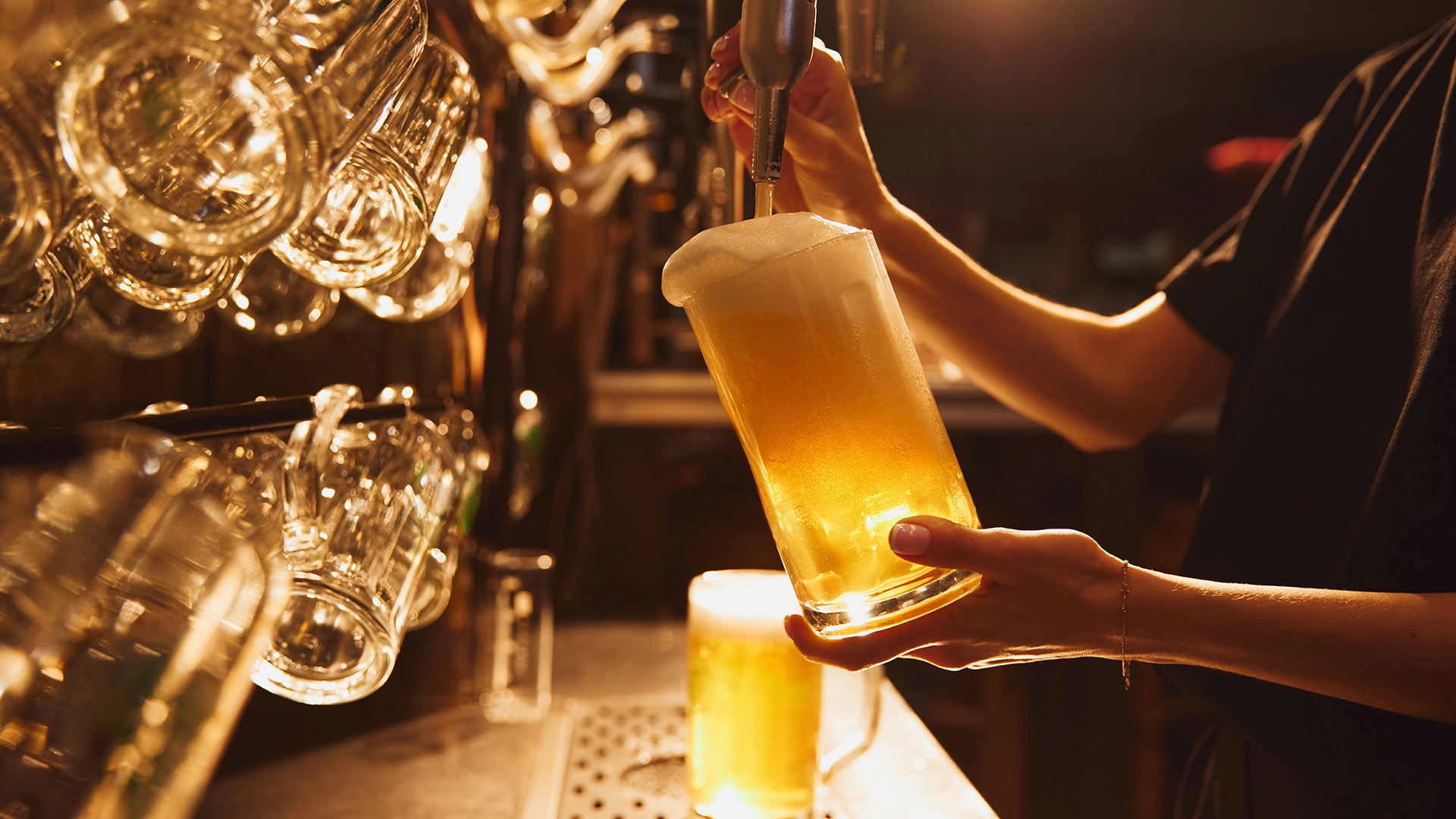
What is draft beer?
Canned, bottled, and draft beers share the same ingredients and follow the same brewing methods — with one key difference: draft beer isn’t pasteurized. That’s why it has a shorter shelf life. The distinctions start in the brewery but become even more noticeable when it’s time to serve.
In Portugal, we call it fino or imperial — beer served under pressure that begins its journey in a keg or tank, travels through a pump, and flows from a tap. One of the main differences between draft beer and bottled or canned versions is the artificial introduction of carbon dioxide (CO₂) in the former, which keeps it fresh for weeks. Nothing unusual for beer, since CO₂ is already part of its natural composition. It’s also the CO₂ that pushes the beer into the glass at high speed — a small miracle of physics. Meanwhile, kegs and tanks are made of metal because it’s impermeable to oxygen, preventing the beer from spoiling.
Once the beer is served, two things happen: the amount of CO₂ decreases and the temperature rises. The warmer the beer gets, the faster it loses CO₂. That’s when people say the beer has “died.” Now you know why.
What does draft beer taste like?
It all starts with the foam. When poured correctly, draft beer develops a fine, creamy, and lasting head, creating a smooth, velvety mouthfeel. But does it taste different? Although the ingredients are the same, draft beer often feels lighter and fresher — partly because it’s meant to be consumed sooner and because the natural carbonation in the keg gives it a more effervescent quality.
Moreover, since draft beer isn’t pasteurized (it doesn’t undergo heat treatment or oxidation), its aromas and flavors are preserved more faithfully.
How did draft beer come about?
In 1785, Joseph Bramah transformed the way the world enjoyed beer by patenting the first beer pump. It didn’t take long for his “beer engines” to become popular — and for a whole new vocabulary to emerge. The letter “D” found its way into English terms like drag, draw, and draught, eventually evolving into draft, now used in pubs across the UK, Ireland, and far beyond.
How should draft beer be stored and served?
Beer should be stored in kegs at around 12°C (54°F) and served between 3°C and 8°C (37°F–46°F). Once opened, a keg should ideally be consumed within three to five days to ensure the beer’s freshness and flavor remain intact.
Would you like me to make this sound more like a magazine article for an English-speaking brewery or beer brand (more engaging and branded tone), or keep it as a professional informative translation (clear and neutral)?
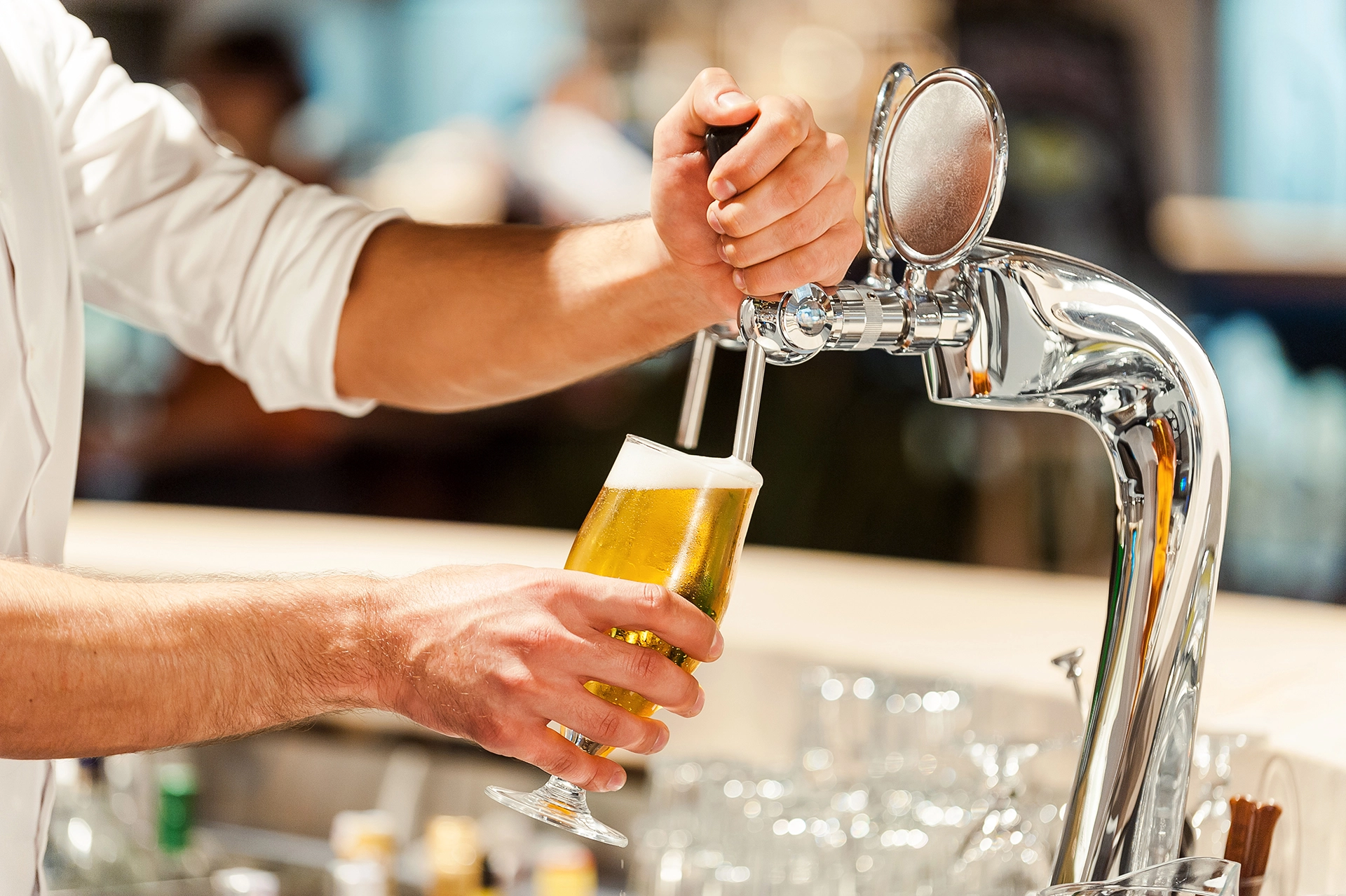
What Makes a Perfectly Poured Beer?
The right choice of glass and the proper pouring technique — that famous 45-degree angle to create the perfect head — are two of the golden rules for serving a great draft beer. But there’s more to it than that. Before the beer even touches the glass, the glass itself should be rinsed with high-pressure water to remove any residue that could interfere with the flavor.
Pressure is another key factor. It should be carefully adjusted and never exceed 3 bars. While higher pressure speeds up the pour, it can also lead to excessive carbonation and alter the taste. The ideal pressure, however, depends on several variables, including the beer style being served.
SO, IS IT FINO OR IMPERIAL?
Ordering an imperial in Porto — or Coimbra — might raise a few eyebrows. And asking for a fino at a southern bar could earn you the same reaction. But regional quirks always have a story behind them.
The term fino, commonly used in northern Portugal, is said to have originated in Coimbra in the 1940s, thanks to a local bon vivant named Toninho Saraiva. According to Boémia Coimbrã, a memoir by A. Nicolau da Costa, Toninho was known for always asking for “a glass of beer in a fine glass!” — referring to the slender pilsen glass. The phrase caught on, and soon enough, the word fino stuck as the name for draft beer in the region.
The term imperial, on the other hand, comes from a story where a brand name became a household term. Until 1916, Lisbon was home to a brewery called Germânia — traces of which still remain in the city’s architecture and in one of its historic beer halls. It was there that Portugal’s first draft beer brand, Imperial, was born. The beer, served from wooden kegs, made its way into Lisbon’s taverns and cafés, where it quickly became a sensation. Before long, asking for “an imperial” became synonymous with ordering a draft beer — a name that endures to this day.