
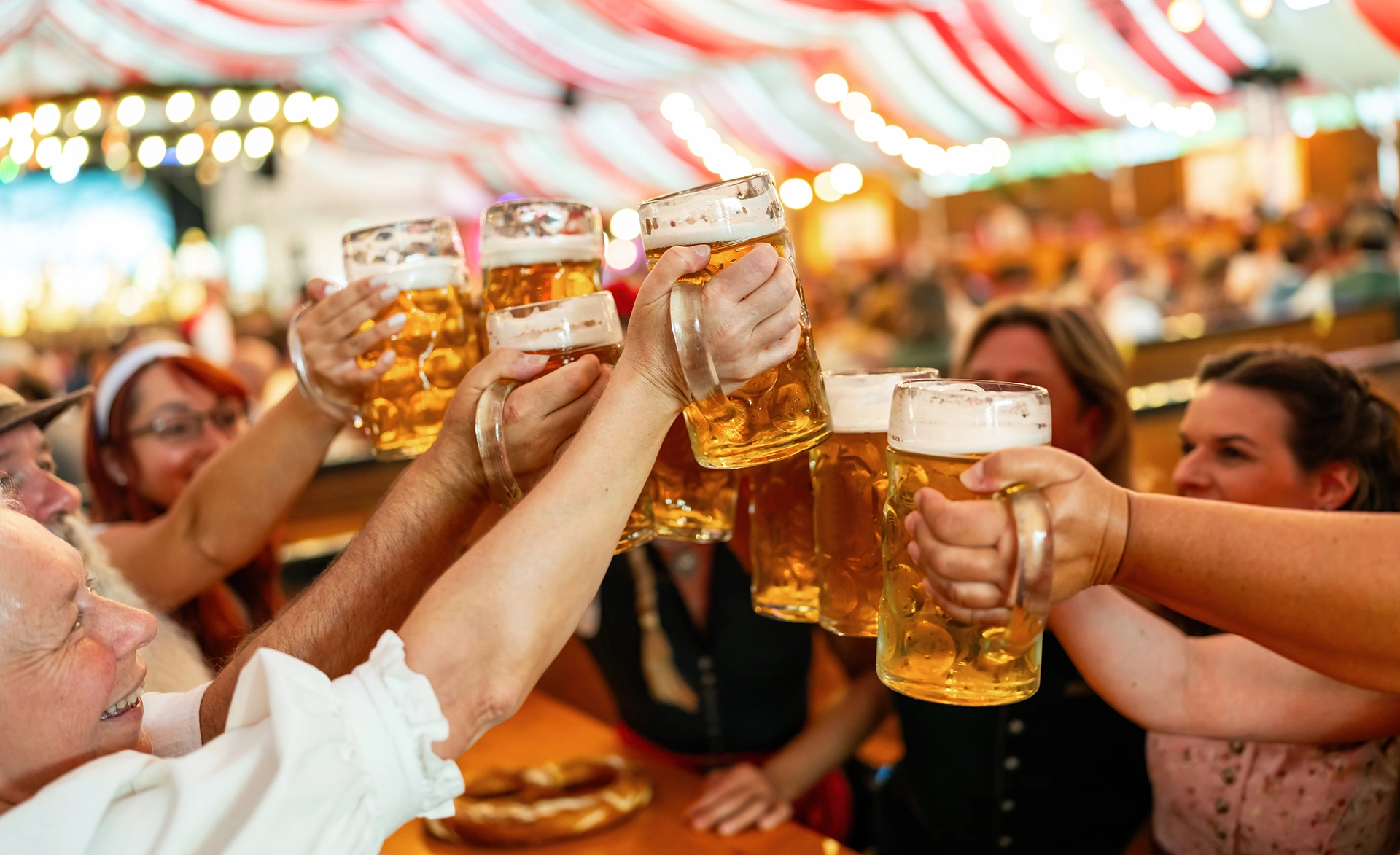
In Bavaria, brewing traditions are to be taken seriously. Examples include the Purity Law, the oldest food law still in use, which defines the ingredients that beer must be made from; the beautiful hop plantations in Hallertau, the king of bitterness; and naturally, Oktoberfest, the largest beer festival in the world.
To toast Bavarian beer is therefore to celebrate tradition, but also to understand that it is possible to be purist while promoting innovation. Oktoberfest is a prime example of how things can be done differently without losing the original direction. And although many changes have brought the festival to the present day, it still bears many similarities to the initial celebration that captivated the Bavarians.
In the early years, the Märzen style dominated. Brewed in Bavaria in March (März in German means March), this malted Amber Lager was stored in cellars to be consumed over the summer. To ensure better preservation, the alcohol by volume (ABV) was high: 6%.
By the mid-1970s, the Paulaner brewery, one of the six that form the core of Oktoberfest, developed a version that was still malted but golden in color, lighter, and, for many palates, more appealing than the traditional Märzen. The goal was to create a beer that could be more widely consumed and appreciated during Oktoberfest. By the 1990s, Paulaner’s innovation became the standard, and all brewers adopted this style. From that decade onward, this beer became informally known as Festbier. Today, many breweries produce Festbier worldwide. At Oktoberfest, however, only the six magnificent breweries are allowed to serve it. But more on that shortly.
Märzen vs Festbier
Festbier is less intense and less roasted than Märzen, characteristics that make it easier for Oktoberfest visitors to drink. But there are more details that distinguish the two.
Orange in color, Märzen is a transparent and clear beer, bright with ivory-colored foam. On the nose, the intensity of German malt aromas is moderate. Notes of bread and toasted flavors are present, with little to no hop aroma. On the palate, the initial malt suggests some sweetness, but the finish is dry.
Festbier is a German Lager, clean, clear, and yellow to golden in color. It has a moderately marked malt flavor and a subtly expressed hop character. It displays elegant German malt flavors without being too heavy or full. The taste mainly comes from Pils malt, with slightly toasted hints. On the palate, the texture is smooth and somewhat creamy.
A feast for six
Only six breweries are permitted to serve the thirsty visitors of Oktoberfest: Augustiner, Hacker-Pschorr, Hofbräu, Löwenbräu, Paulaner, and Spaten. All were founded in Munich and are still in operation today. They share a long history and respect for the Purity Law.
Augustiner:
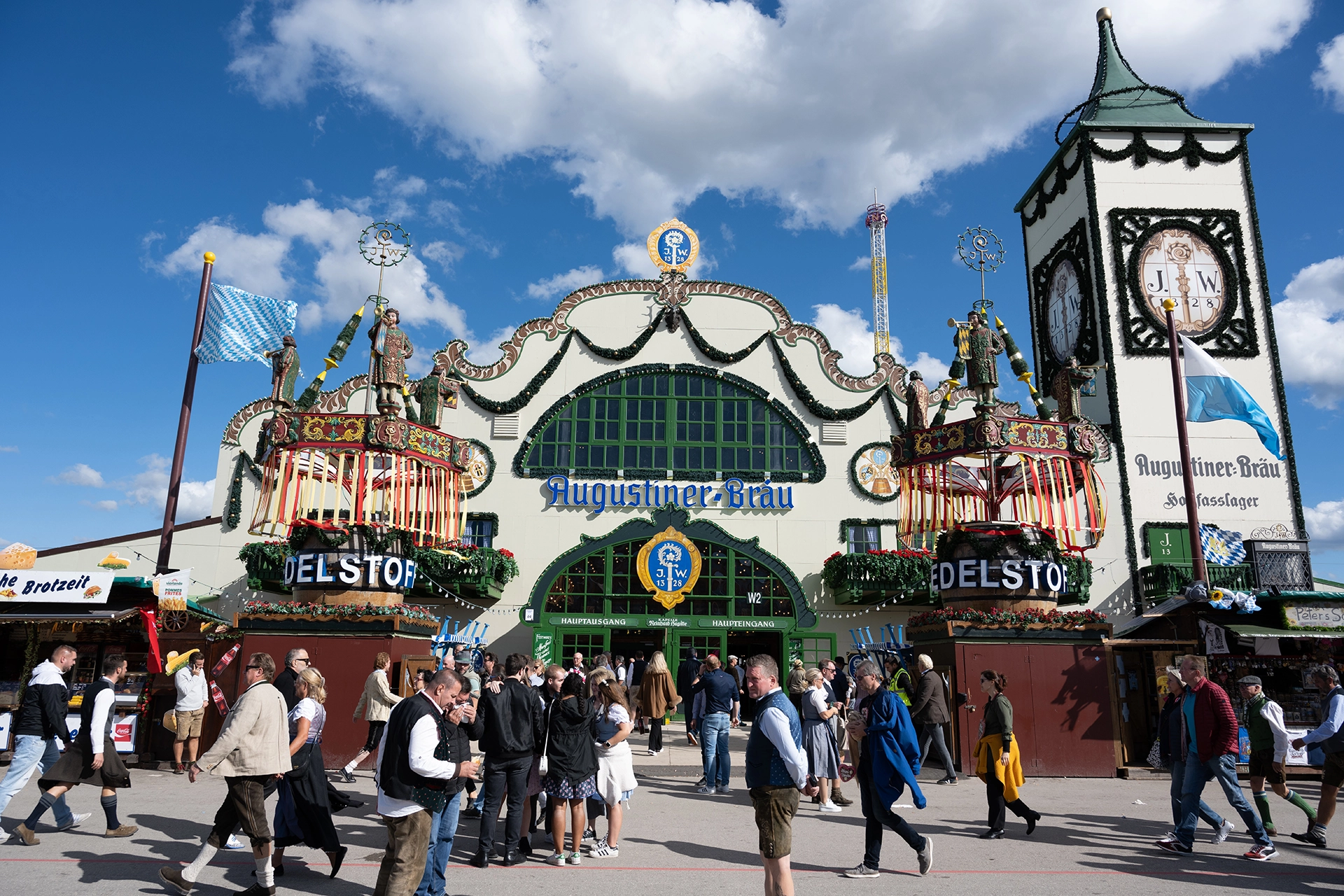
Founded by monks of the Augustinian order (which still exists) in 1328, this is the oldest brewery in Munich still in operation – since 1817 it has been located on Neuhauser Straße. Augustiner’s Festbier has an ABV of 6% and can be purchased at four different locations within the Oktoberfest grounds. A curiosity: Augustiner is still stored in 200-liter wooden barrels.
Hacker-Pschorr:
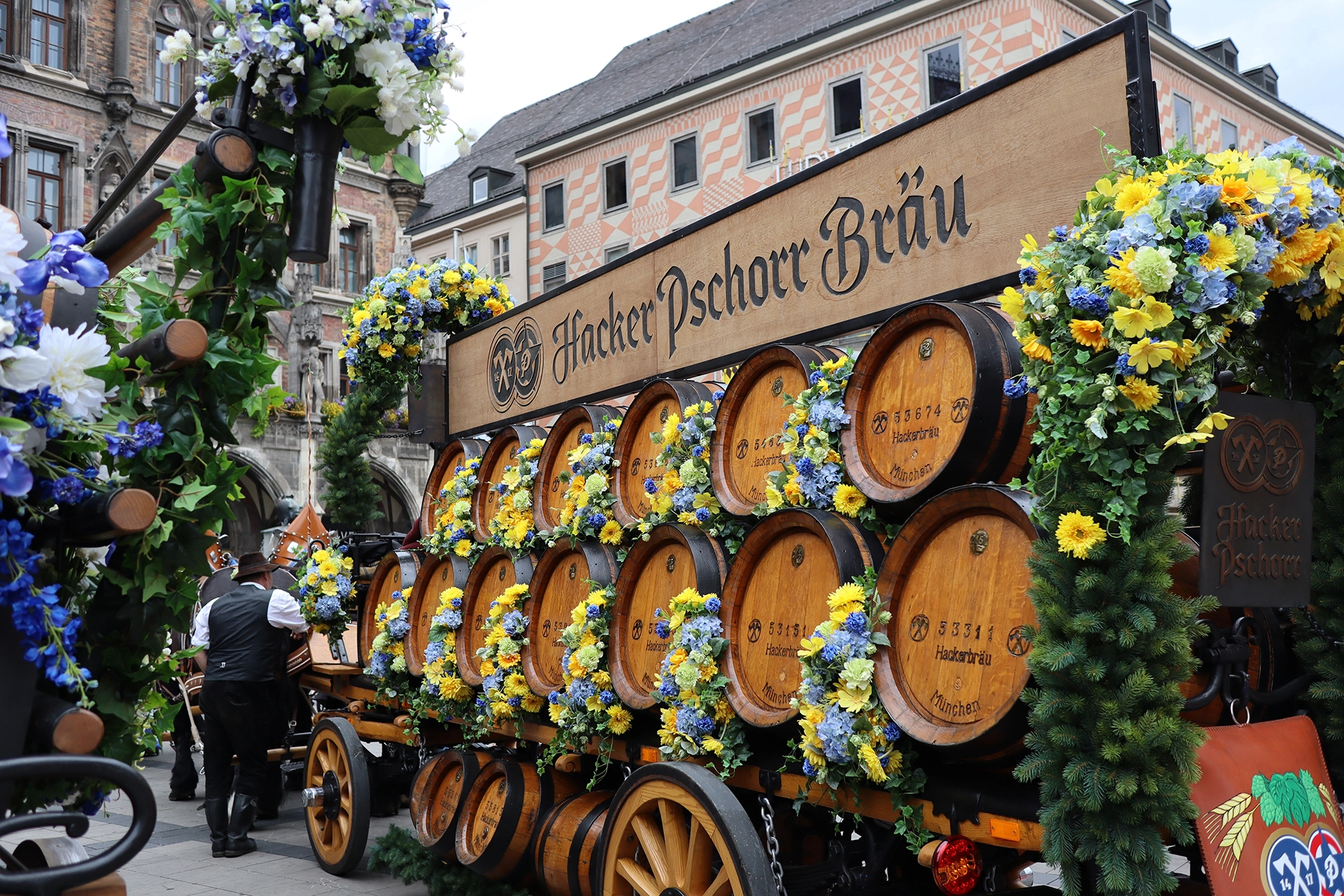
This brewery, which was established in 1417 on Sendlinger Straße, serves the lightest beer at Oktoberfest, with an ABV of 5.8%. Since 2007, the beer has been sold in its traditional swing-top bottles at six different locations within the Oktoberfest grounds.
Hofbräu:
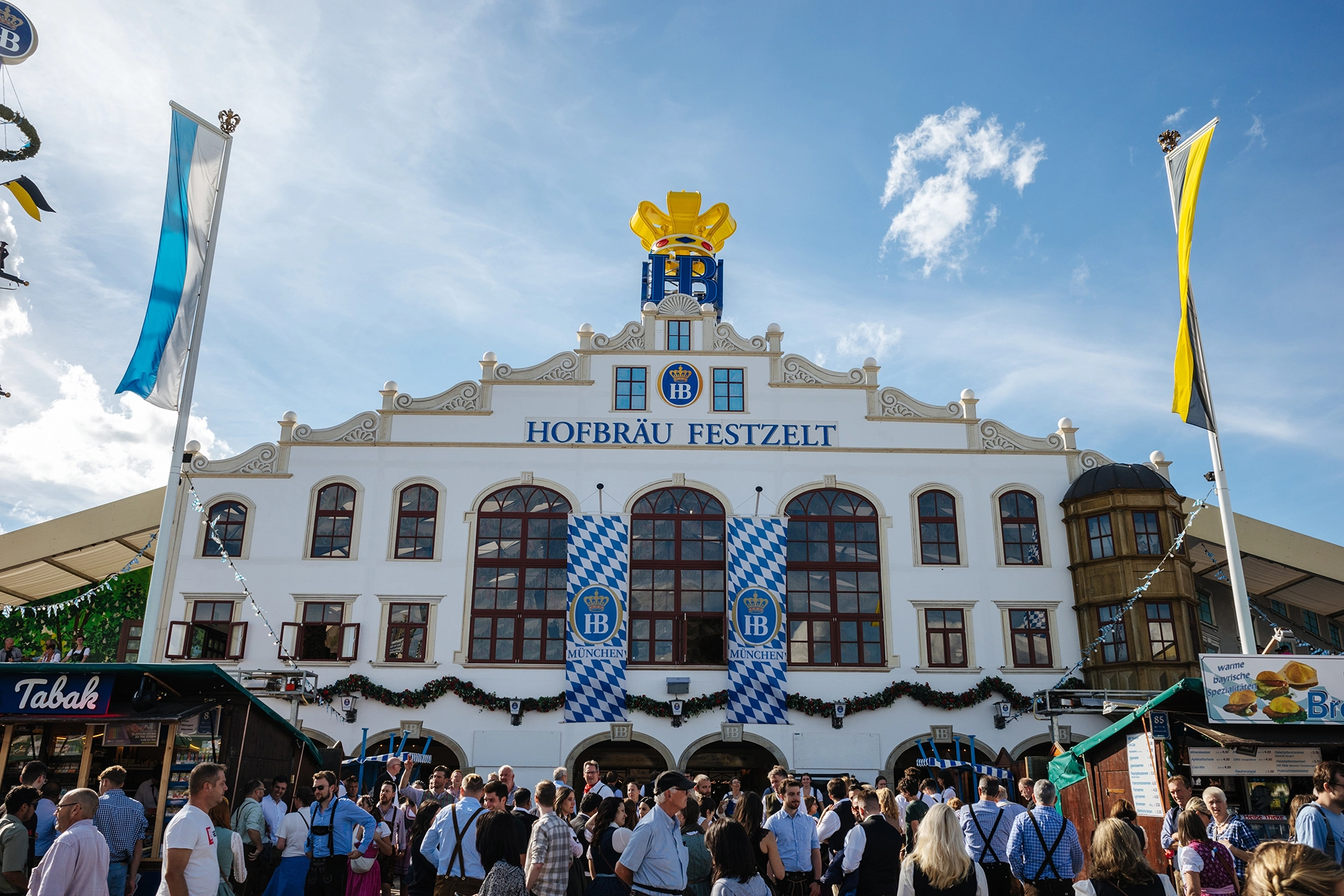
Founded in 1589 in the center of Munich, the brewery moved in the 19th century to the beer garden area. Today, it is located in the Munich-Riem district. Hofbräu holds the title for the highest ABV beer at Oktoberfest: 6.3%. It can be found at two locations within the festival grounds.
Löwenbräu:
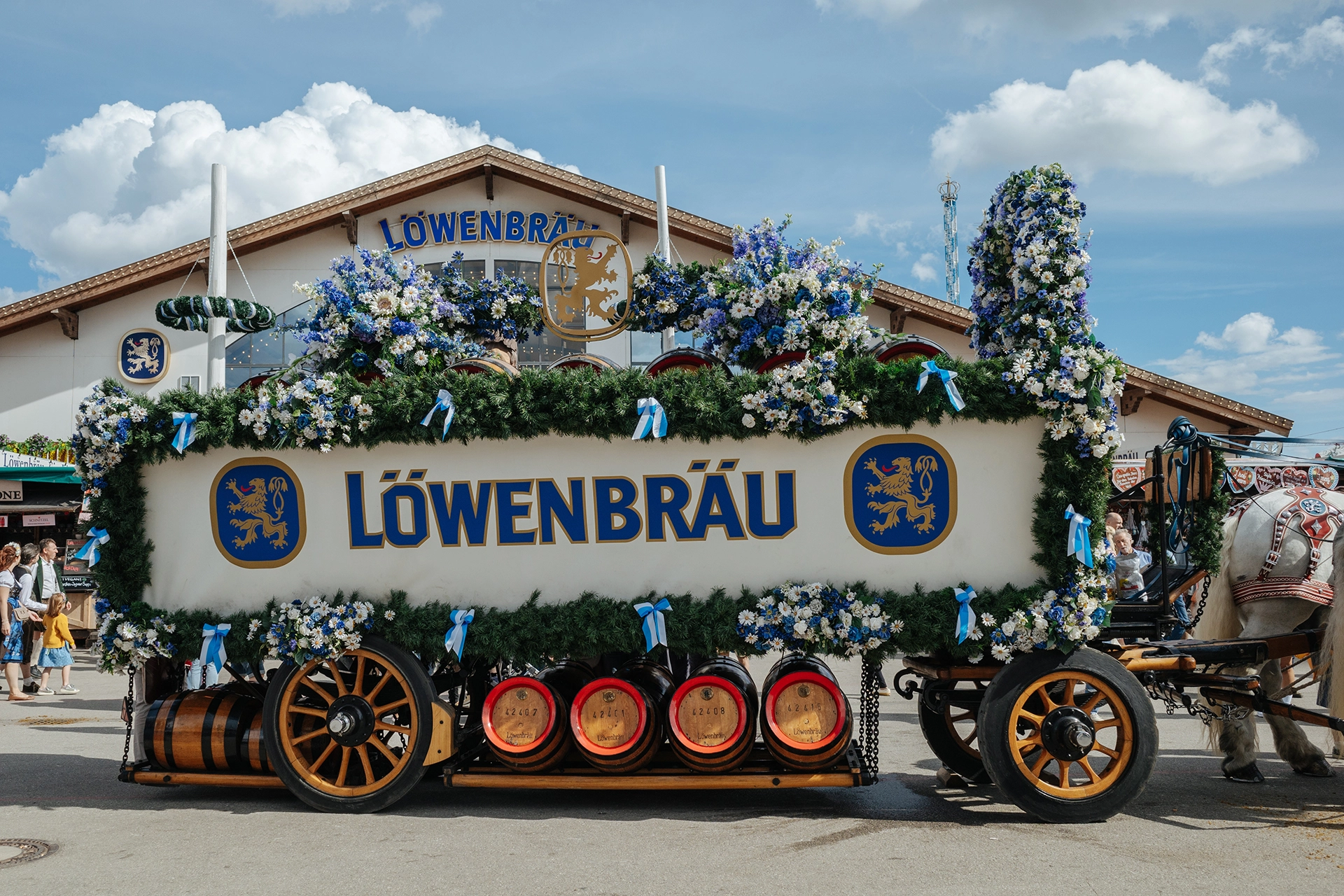
The name dates from the 19th century, but the brewery has existed since the 14th century. Löwenbräu became Munich’s largest brewery in the 19th century, moving to Nymphenburger Straße. With a 6.1% ABV, Löwenbräu-Wiesntrunk can be enjoyed at three different locations at Oktoberfest, including the brewery’s own tent, whose iconic lion does not go unnoticed by anyone.
Paulaner:
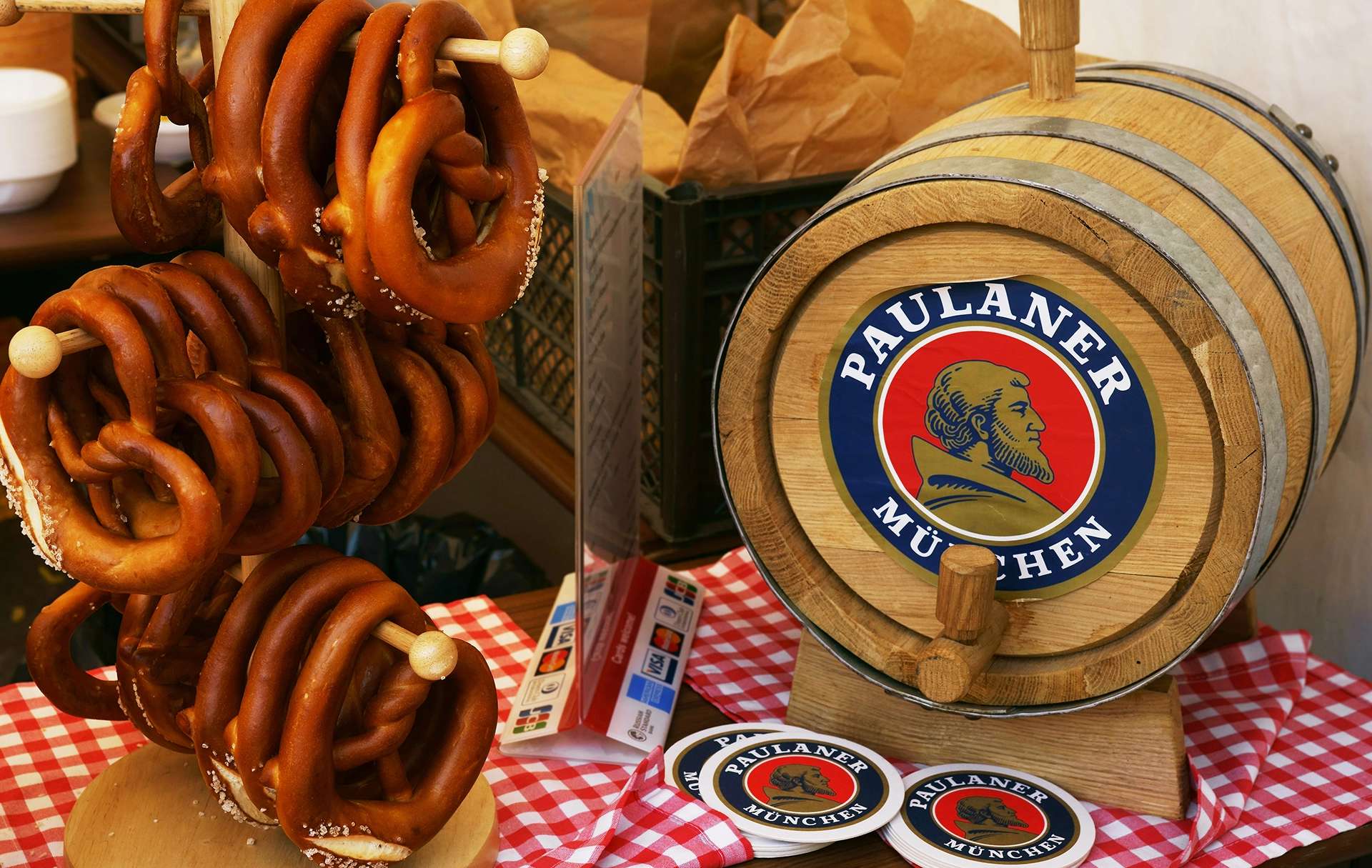
Of the six, it is the most recent brewery, founded in 1634 and located in Munich-Langwied. With 6% alcohol, it is one of the most popular beers at Oktoberfest and can be found in nine tents.
Spaten:
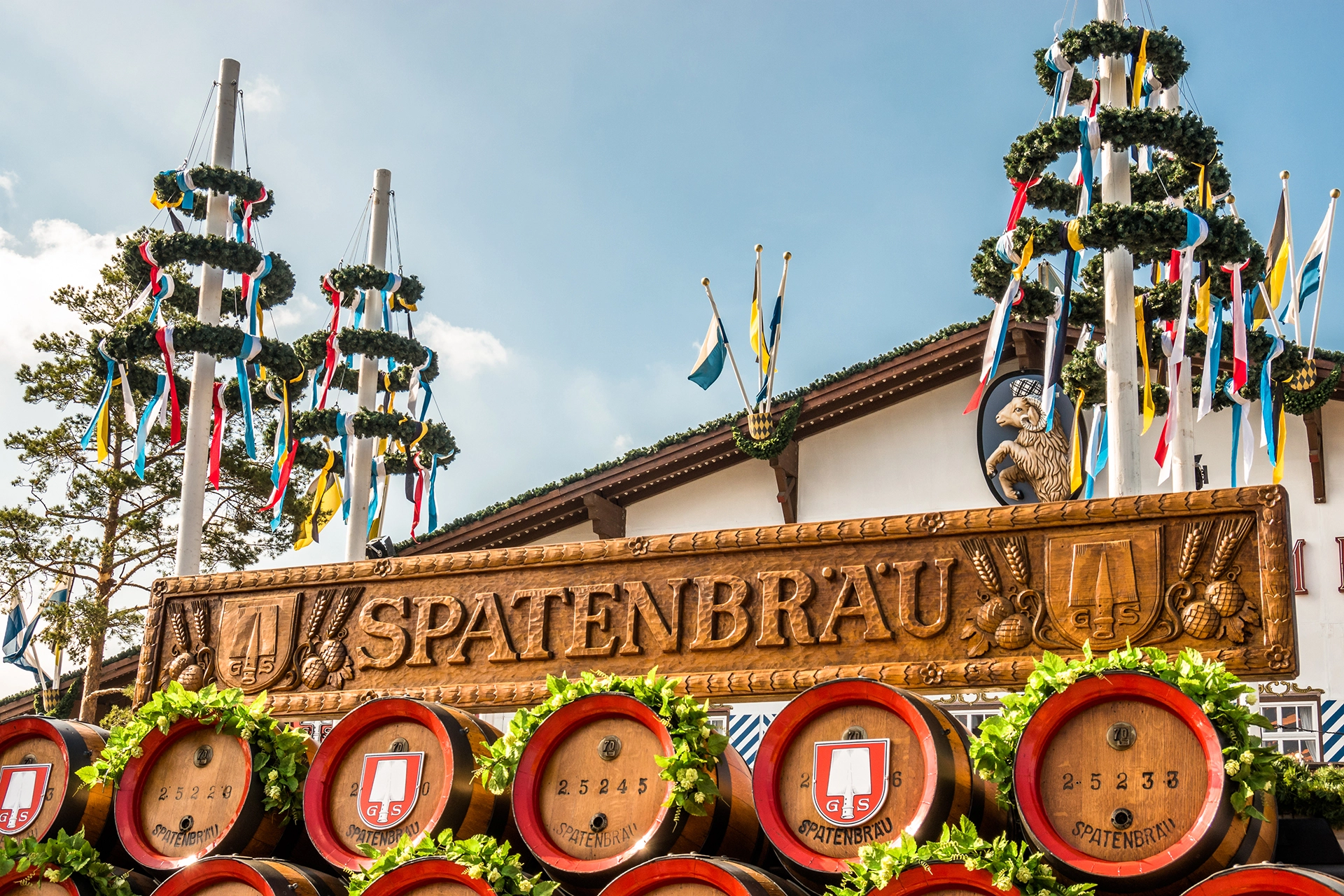
Founded in 1397, the brewery moved to Marsstraße in the 19th century. With an ABV of 5.9%, Spaten can be found in seven locations within the Oktoberfest grounds.