In 1572, Os Lusíadas was published for the first time. In one of the most important and emblematic works of Portuguese literature, we find the following verses:
Já a manhã clara dava nos outeiros
Por onde o Ganges murmurando soa,
Quando da celsa gávea os marinheiros
Enxergaram terra alta pela proa.
When recounting the moment the Portuguese sighted India, Luís de Camões spares no literary heroism. The voyage, commanded by Vasco da Gama, was turbulent—marked by the fury of seas and winds—but concluded in 1498 with the discovery of the maritime route to India.
The journey was long and arduous, yet appealing because of the trade opportunities the Indian subcontinent offered. For the English, regular voyages began in the 17th century, when the British East India Company saw the exotic territory as a key trading hub. For the company’s workers, the hot, humid climate called for refreshing beer. Without the means to brew it locally, the merchants attempted to import it from home. The challenge? Keeping it in drinkable condition throughout the five- to six-month journey.
From One Discovery to the Next
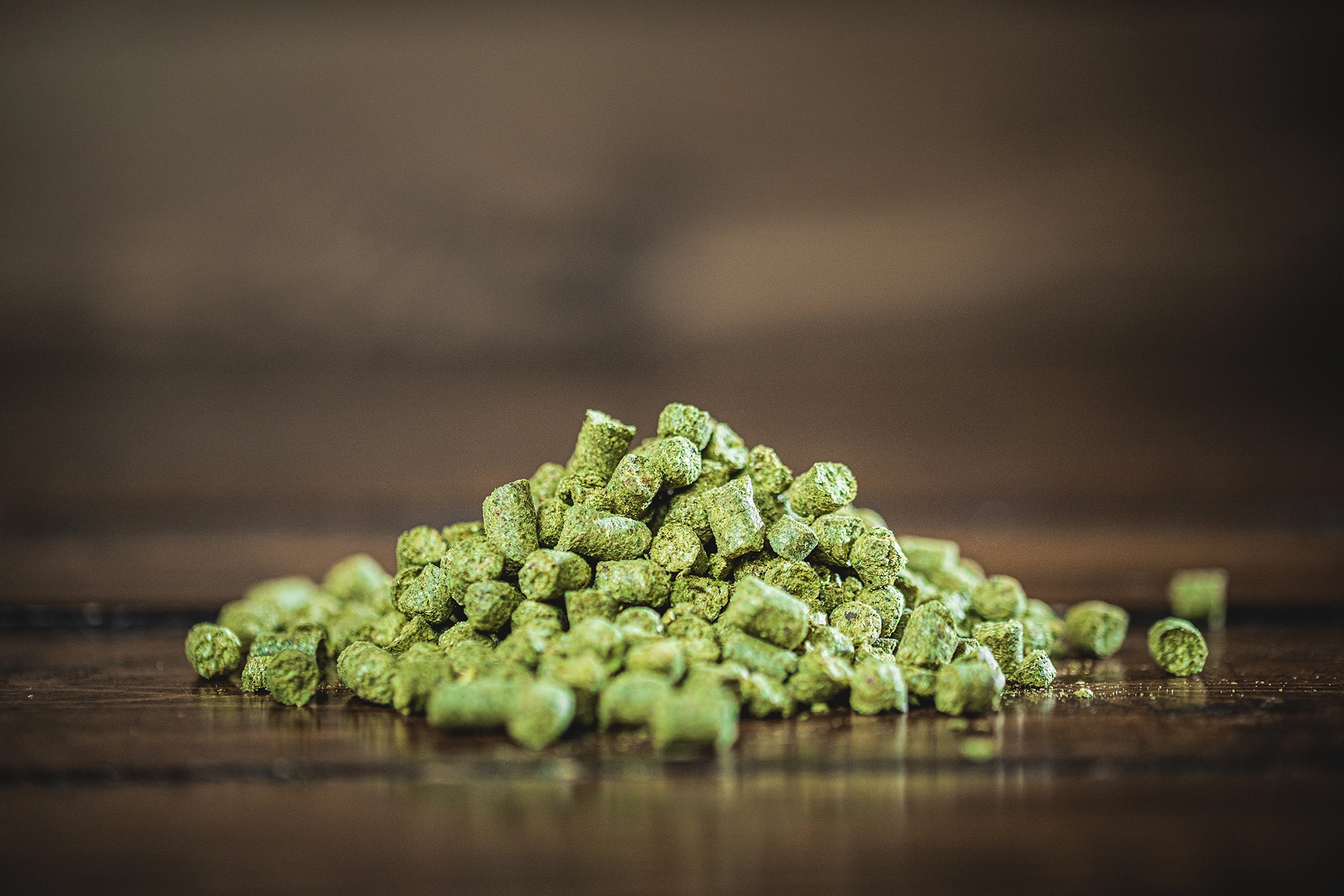
By 1760, brewers already knew that adding more hops to their beer helped it stay fresh for longer. Armed with that knowledge — and with a prime location in London, near the docks where ships departed for India — brewer George Hodgson quickly turned his attention to exporting beer to that distant market.
Through his brewery, Bow Brewery, Hodgson managed to secure a near monopoly over a business that, because of its small scale, held little appeal for competitors. His strong relationships with ship captains also helped him ship his beer, known as October, to India. It was a stronger pale ale, originally meant to mature for 18 months. However, when sent to India without prior aging, the beer arrived just as good — if not better. The six-month voyage at sea acted as a kind of natural maturation process.
For more than forty years, the beer had no official name. It was simply referred to as “Pale Ale for India” or “Pale Ale prepared for the Indian climate.” Then, in 1835, the Liverpool Mercury coined the term India Pale Ale, and the now-famous abbreviation IPA stuck.
Hoppy and pleasantly bitter, IPA quickly became the drink of choice among British expatriates. Light and refreshing, it was the perfect match for the hot Indian climate.
Make Way — Burton Steps In
Burton-on-Trent is an English town famous for its water, naturally rich in calcium sulfate — perfect for brewing pale ales. Between the late 18th and early 19th centuries, Burton’s breweries thrived on exports to the Baltic region. But this trade came to an abrupt halt with Napoleon’s Continental Blockade.
One affected brewery, Allsopp, decided to reinvent itself and seek new markets. During a visit to London, owner Samuel Allsopp learned that the East India Company was unhappy with the high prices charged by Frederick Hodgson, George Hodgson’s grandson, for his exported beers.
Challenged to reproduce the Bow Brewery beer, Allsopp created his own version of the IPA and, in 1823, shipped his first order to India. Other breweries, like Bass, soon followed suit — but this time, the success didn’t stop in India. With the expansion of the British railway network, Burton’s beer began reaching cities across England. By the second half of the 19th century, IPA was already a household favorite at home.
The American Revival
By the end of the 19th century, IPA began losing prominence in the very region that gave it its name. The advent of refrigeration and a better understanding of yeast allowed brewers to produce high-quality lagers locally — a crisp, refreshing drink ideal for the Indian heat. Meanwhile, beer consumption declined in India and other colonies as beverages like tea became more popular.
With overseas markets drying up, domestic taxes on stronger beers further hurt the style’s survival. The IPA’s decline had begun.
Its revival was slow, arriving only in the 1980s, when American craft breweries began to rediscover and reinvent the style. Using local hop varieties like Chinook and Cascade, they created beers bursting with resinous, citrusy flavors. Initially a hit on the West Coast, these bold IPAs soon captivated drinkers across the United States — and from there, the rest of the world.
Driven by this renewed enthusiasm, the IPA evolved into countless variations. The craving for even hoppier, more aromatic brews gave rise to styles like the Double IPA, with even stronger bitterness and flavor intensity.
Today, the India Pale Ale is brewed around the globe — often inspired by its American counterpart — and stands as one of the defining symbols of the modern craft beer movement.
IPA Styles
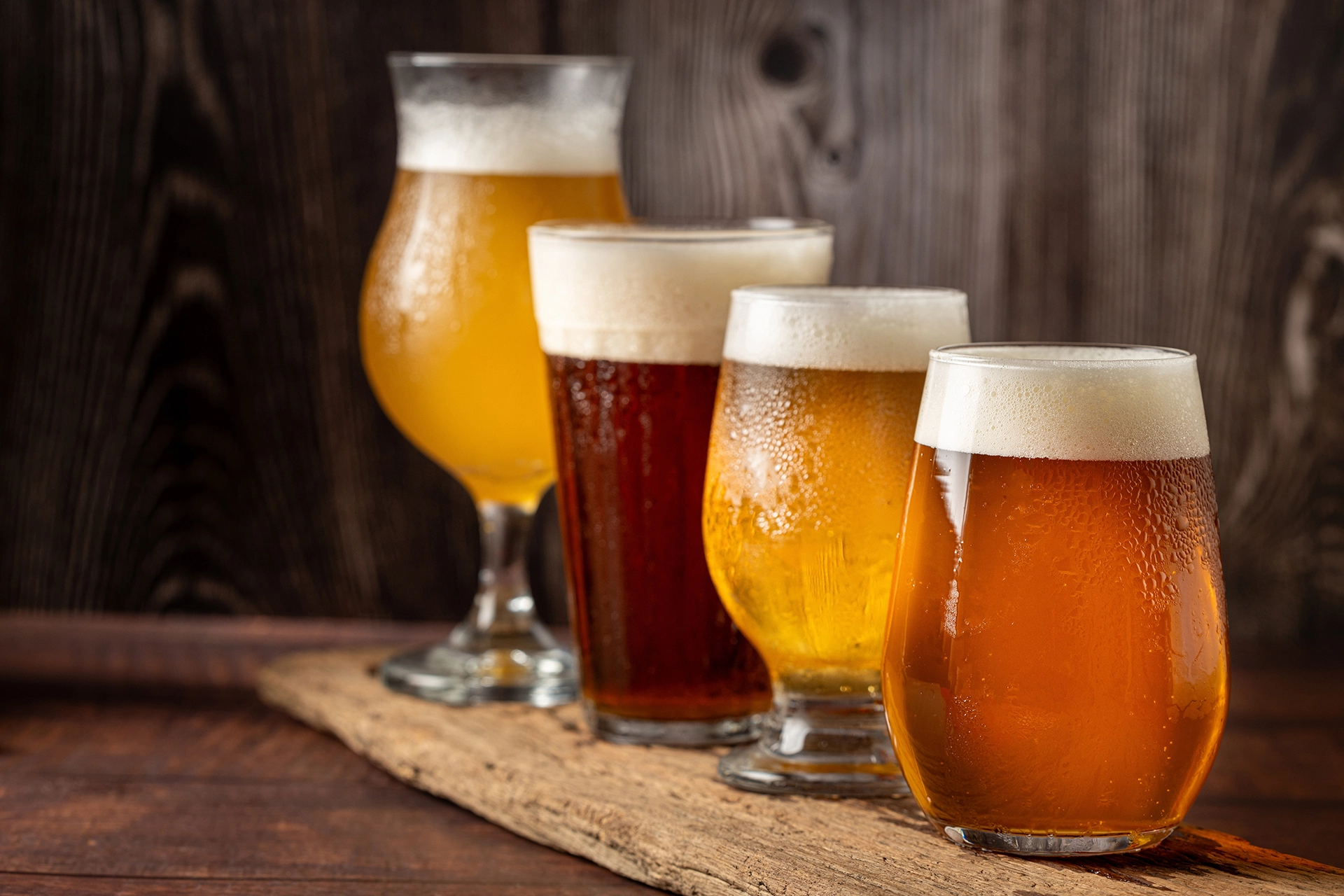
English IPA: The color can range from golden to stronger amber, but most are pale. The hop flavor — floral, citrus, or pepper — is moderate to high, well balanced with the malt. It is moderately bitter and has an alcohol by volume (ABV) between 5% and 7.5%.
American IPA: A beer where hop character and bitterness range from moderate to very high. Golden to reddish amber in color, the American IPA shows flavors of American and New World hops — citrus, floral, resinous, pine, among others. ABV between 5.5% and 7.5%.
Double / Imperial IPA: Even hoppier than the original American IPA, it often uses the dry hopping technique. The higher hop concentration gives the beer an even more bitter character, with strong and complex hop flavor. The color ranges from gold to light orange-copper. ABV between 7.5% and 10%.
Belgian IPA: A relatively recent style, appearing in the 2000s, golden to amber in color. The hop flavor — fruity, citrus, melon, pine — is moderate, as is the malt. Bitterness is high and can be accentuated by the spicy character of Belgian yeast. ABV between 6.2% and 9.5%.
Black IPA: The color ranges from dark brown to black, due to the use of roasted malts. The hop flavor — stone fruit, citrus, melon, pine — is medium-low to high, with bitterness that can be very strong. The roasted malt flavor is medium-low, with hints of chocolate or coffee. In some areas of the Pacific Northwest, it is known as Cascadian Dark Ale. ABV between 5.5% and 9%.
Brown IPA: Hoppy and bitter like the American IPA, but with some caramel, chocolate, or coffee malt character. The color ranges from reddish brown to dark brown. Bitterness and hop flavor — citrus, floral, pine, resinous — are moderate to high. ABV between 5.5% and 7.5%.
New England IPA (NEIPA): With moderate bitterness and fruitier and smoother than other IPAs, this is a relatively recent beer defined by citrus and tropical fruit notes. Being hazy, it retains strong character and is usually sweeter than other IPAs. ABV between 6.3% and 7.5%.
Red IPA: Similar to the American IPA, but with crystal malts. Hop flavors are in the same range, with medium-high to very high bitterness. The color ranges from light reddish amber to dark copper-red. ABV between 5.5% and 7.5%.
Rye IPA: A beer that uses between 15% and 20% rye malt, drier and slightly spicier than an American IPA. The hop bitterness, medium-high to high, seems to last longer due to the rye. The hop flavor — citrus, pine, resinous, floral — is medium to very high, with color from golden to light reddish amber. ABV between 5.5% and 8%.
West Coast IPA: Golden in color, this beer has bitterness as its essence. Brewed on the West Coast of the United States, near large hop fields, it is a tribute to the king of bitterness. Experimentation brought citrus and tropical aromas, and intense flavors typical of the creativity of brewers from Seattle, Oregon, or California. The aroma can range from pine to grapefruit. ABV between 6.7% and 8%.
White IPA: Using wheat malts, it is similar to a Belgian Witbier, but with the hop character of an American IPA. Bitter and hoppy like an IPA, but fruity and light like a Witbier. Pale to golden in color, it was created by American craft brewers as a spring beer meant to appeal to Witbier and IPA drinkers. ABV between 5.5% and 7%.