In the land of pubs, beer is almost as old as agriculture itself. Brewed since the Bronze Age, the drink flourished thanks in part to three ideal conditions for barley malt production: fertile soil, rainfall, and gentle breezes. Since then, much has changed in the world of Irish beer. The throne initially held by red ales was taken over by Irish stouts, which remain a kind of Irish institution.
From Monasteries to Homes
Like in other European countries, beer quality improved when it began to be brewed in monasteries. Irish monks used many herbs and gentian root in their brew, which they called “liquid bread.” Gentian root took the place now commonly held by hops, which did not grow in Irish soils, and gave the beer its characteristic bitterness.
By the 17th century, brewing left the monasteries and moved to homes—mainly in the hands of women, known as alewives. This historical milestone gave rise to a myth that still survives in Irish traditions, stories, and folklore.
The long hours spent around cauldrons—often placed outdoors—and the practice of marking the start of beer sales with a bundle of barley on a tall stake resembling a broom helped shape the modern image of witches.
The Importance of the Name
Beer industrialization began a century later, with large producers adopting their founders’ names for their brands. Examples include John Smithwick, who established the first major Irish brewery in Kilkenny in 1710; Arthur Guinness, who in 1759 followed suit in Dublin at the site that now houses the Guinness Storehouse, the brand’s interpretive center; William Beamish and William Crawford, who opened their brewery in Cork 33 years later; and James Murphy, who founded his brewery in this southern city in 1856.

From Porter to Stout
Irish beer is associated with the color black, but it wasn’t always that way. Before black malt was patented in 1817, Irish beer had a reddish hue. However, it didn’t take long for Dublin to surpass London in porter production, a dark beer with a strongly roasted flavor.
Arthur Guinness shares some of the credit for this, as he stopped producing ales to focus on porter and stout, which eventually evolved into Irish stouts. This transition was partly driven by malted barley taxation, which led major breweries to use some unmalted, roasted barley in production. This added the dry, bitter flavor that remains the distinctive mark of Irish dark beer.
By the early 20th century, a hundred years after its founder’s death, Guinness was not only Ireland’s largest brewery but also the largest in Europe. Twenty years later, it would become the largest in the world. At the start of World War II, only two breweries remained open in Ireland: Guinness and The Mountjoy Brewery.
The Renaissance of Craft Beer
This duopoly limited the diversity of Irish beer, but in the 1980s, the craft beer movement experienced a revival. The first step was the opening of Hiden Brewery in Lisburn. However, the major growth came with the launch of the first brewpub in the Temple Bar district of Dublin. The pioneers were Liam LaHart and Oliver Hughes, who had previously attempted to establish craft beer brands twice without success.
Today, according to Tourism Ireland, there are 150 breweries and 7,500 bars, no longer dominated solely by big brands, leaving space for craft beers to shine. Dublin remains Ireland’s beer capital, with 16 breweries and over 1,000 pubs. Yet pubs and beer remain a long-standing love for the Irish across the country.
According to a study on beer consumption by the consultancy Kirin, the average per capita consumption reaches 95.8 liters per year, placing Ireland 6th in the world ranking of beer consumers.
TYPES OF IRISH BEER
The two most important varieties of Irish beer:
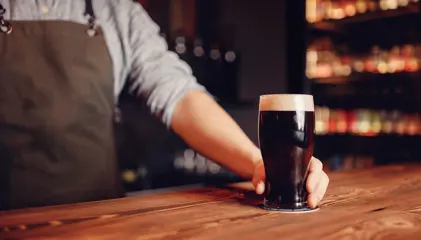
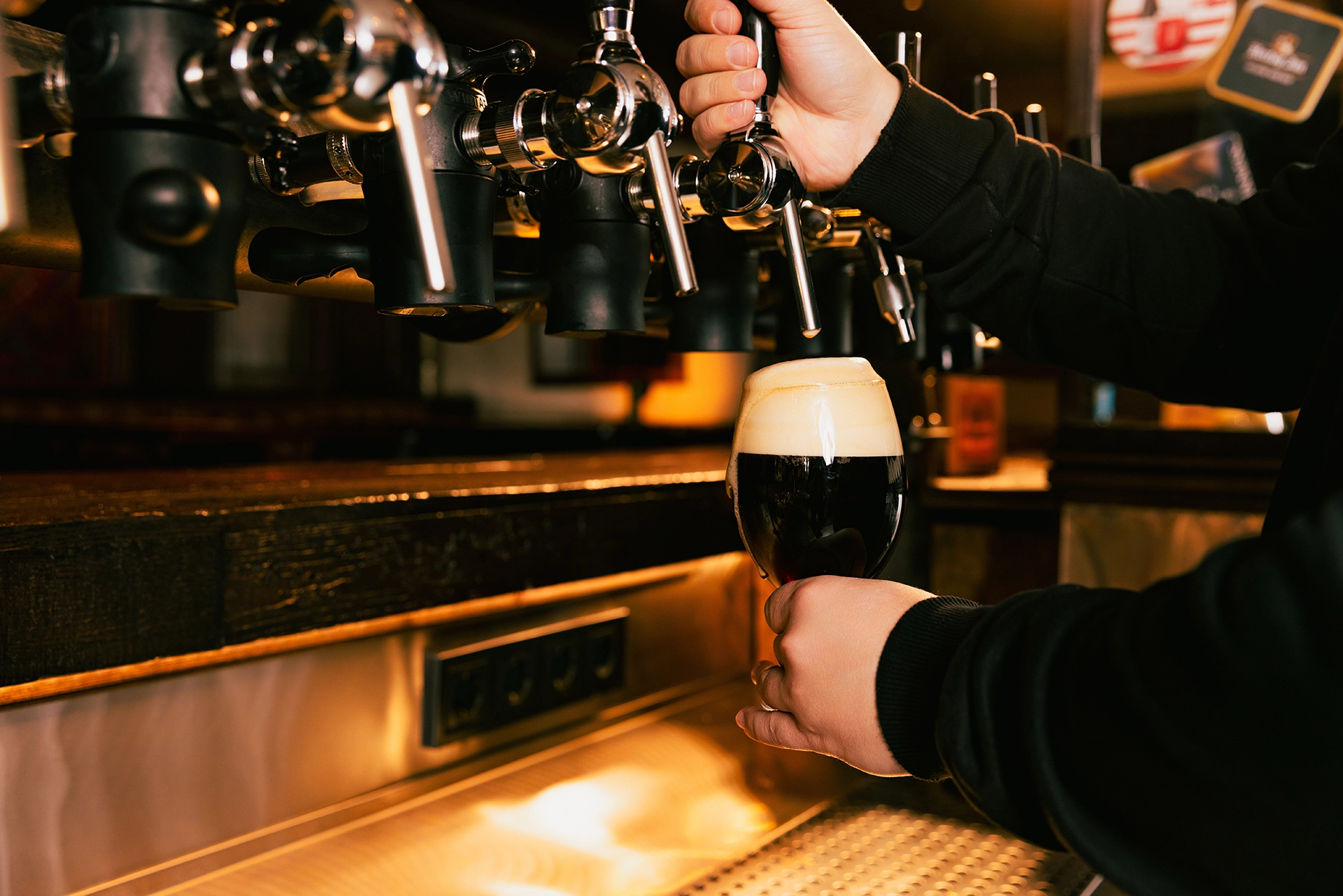
Irish Stout: This is the most popular style of Irish beer. This dark beer has aromas of coffee and dark chocolate—two flavors that are echoed in the taste, balanced with the characteristic bitterness and roasted notes. It is topped with a thick, creamy foam with a bronze hue.
Irish Red Ale: This was the first type of beer produced in Ireland, although the recipe that survives today has undergone many changes. With a copper-like color, this beer has caramel aromas subtly present in its taste, which is quite toasted.