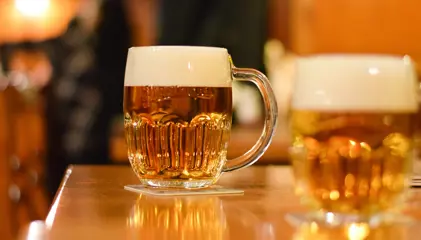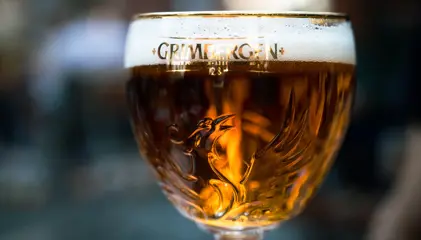
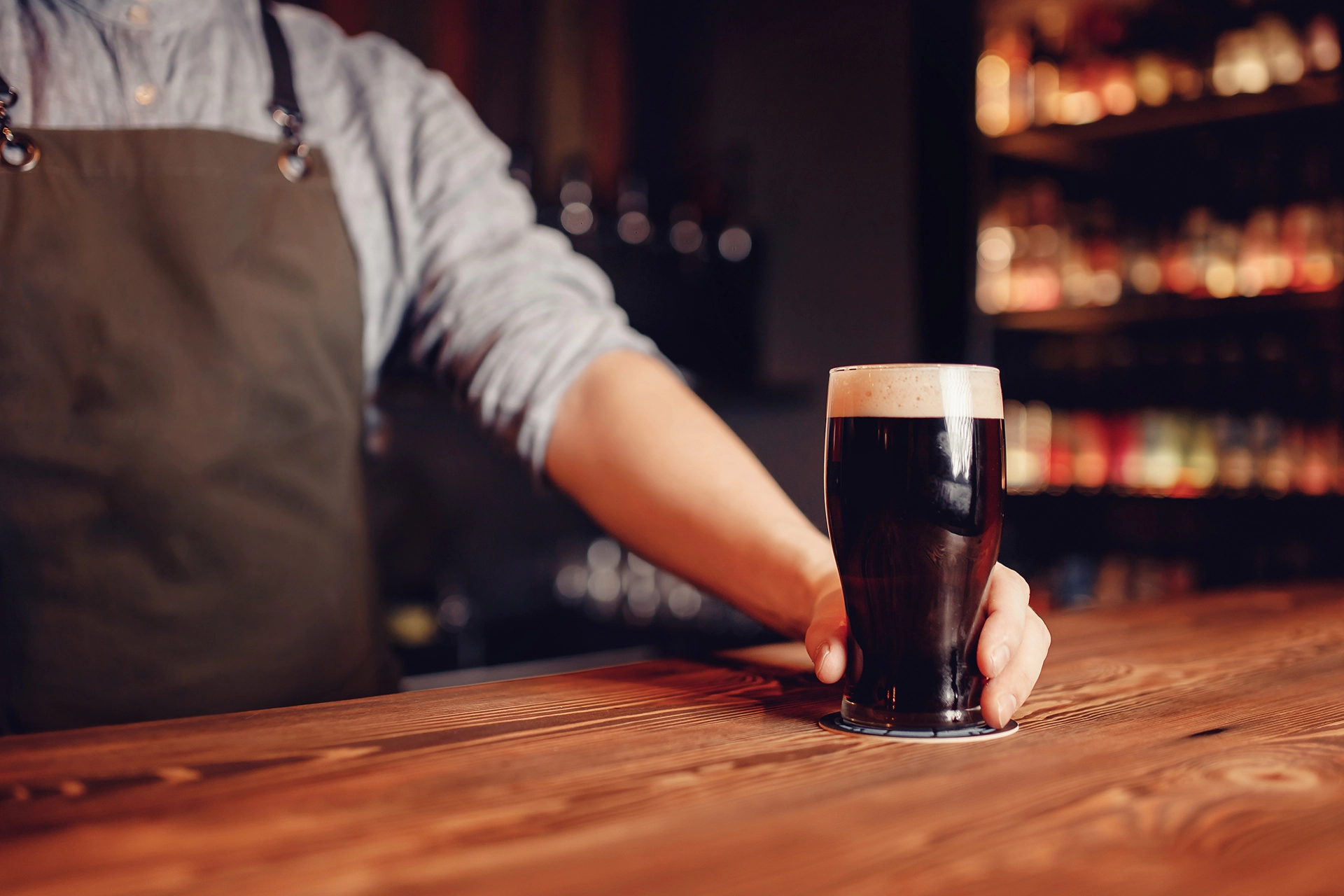
While Stouts and Porters have gained the most international recognition in recent decades, tradition in dark beers still speaks German. Schwarzbier and Munich Dunkel stand out for their longevity, originality, and resilience.
This article explores the history, flavors, and differences between these two lager styles that, despite their similar appearance in the glass, have distinct profiles and call for specific occasions and pairings.
History
Munich Dunkel and Schwarzbier are so old that it’s hard to determine which came first. Schwarzbier is likely the older of the two—some even consider it the oldest continuously produced beer style in the world. Archaeological digs in a Celtic tomb about 11 kilometers from Kulmbach, in northern Bavaria, uncovered an amphora containing traces of dark beer and partially baked bread. Historians note that around 3,000 years ago, baking bread was the first step in the beer fermentation process.
Beer is still produced in Kulmbach today, so this early brew was likely an ancestor of modern Schwarzbier. Nevertheless, the first documented beer production center in Kulmbach dates to 1174, marking the emergence of the first Schwarzbier.
If Schwarzbier may be the world’s oldest dark beer, Munich Dunkel has a close ancestor, though it followed a different lineage. A style similar to today’s Munich Dunkel was first produced by Benedictine monks who settled in Munich in the 12th century. The style was further shaped by two of the most famous beer laws in history. The first is the 1516 German Beer Purity Law (Reinheitsgebot), which stipulated that beer could only be made with barley malt, hops, and water (yeast had not yet been discovered).
The second law, enacted in 1553, prohibited brewing during the summer to ensure quality control. Brewers could therefore only work between September 29 and April 23. Both laws bore fruit, giving German beer worldwide recognition and shaping the evolution of Dunkel over the centuries.
The transition to modern Dunkel occurred around the 1830s, thanks to Gabriel Sedlmayr II and the Spaten brewery, who drew inspiration from Belgian and English brewing traditions to refine their techniques, particularly in malt drying and extraction of fermentable sugars during mashing. Sedlmayr II not only improved the Dunkel recipe but also revolutionized the style itself—an innovation that persists to this day.
Schwarzbier
Known as a “Black European Lager” by the Beer Judge Certification Program (BJCP), Schwarzbier literally means “black beer” in German. Compared to Munich Dunkel, it is darker, drier on the palate, and features toasted malt—but not excessively so. Interestingly, among dark lagers, Schwarzbier is the only one with a moderately roasted flavor. Sometimes it’s even called a “black Pilsner,” though don’t expect it to taste like a Stout or Porter.
In the glass, Schwarzbier appears dark brown but not completely black. A ruby hue often shines through in a clear beer with creamy foam. It is a dry beer, characteristic of roasted malts, yet balanced with aromas and flavors of coffee, chocolate, and toffee, sometimes with hints of caramel. The medium to medium-low body highlights the malt flavors and aromas, while the hop presence is moderate. Schwarzbier is smooth, without harshness, astringency, or bitterness, making it easy to drink.
Its alcohol content ranges from 4.4% to 5.4%, and its base ingredients are Munich and Pilsner malts.
Munich Dunkel
In German, Dunkel means “dark.” This dark lager doesn’t disappoint: while some Munich Dunkel brands may appear light brown, the darker shades dominate. Pour, for example, a Super Bock Munich Dunkel Seleção 1927 into a Teku glass, and the name perfectly matches what you taste.
This beer emphasizes pronounced malt flavors and aromas over the moderate, dry bitterness of hops. Rich and complex Munich malt flavors dominate, yet the beer remains balanced between malt sweetness and hop bitterness, with a light to medium body. Classic versions may present aromas of chocolate, toasted malt, nuts, caramel, bread, and biscuit, thanks to the use of dark Munich malt.
Although named after Munich, Dunkel is popular throughout Bavaria. Its creamy foam can range from light to bronze, and its alcohol content falls between 4.5% and 5.6%.
Conclusion
Schwarzbier and Munich Dunkel bring the history of European beer to life, so we recommend trying them as soon as you can. That’s when you’ll notice their distinct differences: the comforting Munich Dunkel, with its complex notes unfolding sip by sip, contrasts with the Schwarzbier, which offers a dry finish reminiscent of a Guinness Stout brewed with a lager fermentation.
To pique your curiosity, here’s a fun historical note: when the great German poet Johann Wolfgang von Goethe (1749–1832) was ill, he always kept a glass of Schwarzbier on his bedside table. Not something we suggest you follow literally, but it’s another reminder of the importance of beer in Central Europe over the centuries—a piece of the intricate beer puzzle that has persisted to this day.