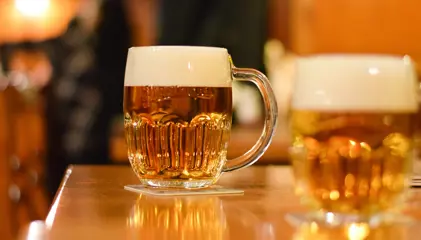
The Porter originated in 18th-century London and gets its name from the porters—the laborers who carried goods from the River Thames docks to markets across the city. Legend has it that the beer was initially brewed right in the pubs by blending lighter beers with older, more aged ones. Its popularity, however, led brewers to start producing it from scratch, eliminating the need for mixing.
By the 19th century, the Stout Porter appeared: a stronger, fuller-bodied, and more alcoholic version of the Porter. By the turn of the 20th century, the two styles officially split into Porter and Stout. Differences? Very few.
IMAGEM
Ingredients
Both styles use dark malts, ranging from brown to chocolate malt. This similarity in ingredients often makes it difficult to distinguish between the two beers. However, many brewers agree that Stouts tend to use more unmalted roasted barley, which gives them the characteristic coffee-like notes associated with this style.
Still, given the constant innovation and experimentation in the brewing world, even this distinction can be quite fluid.
In the Glass
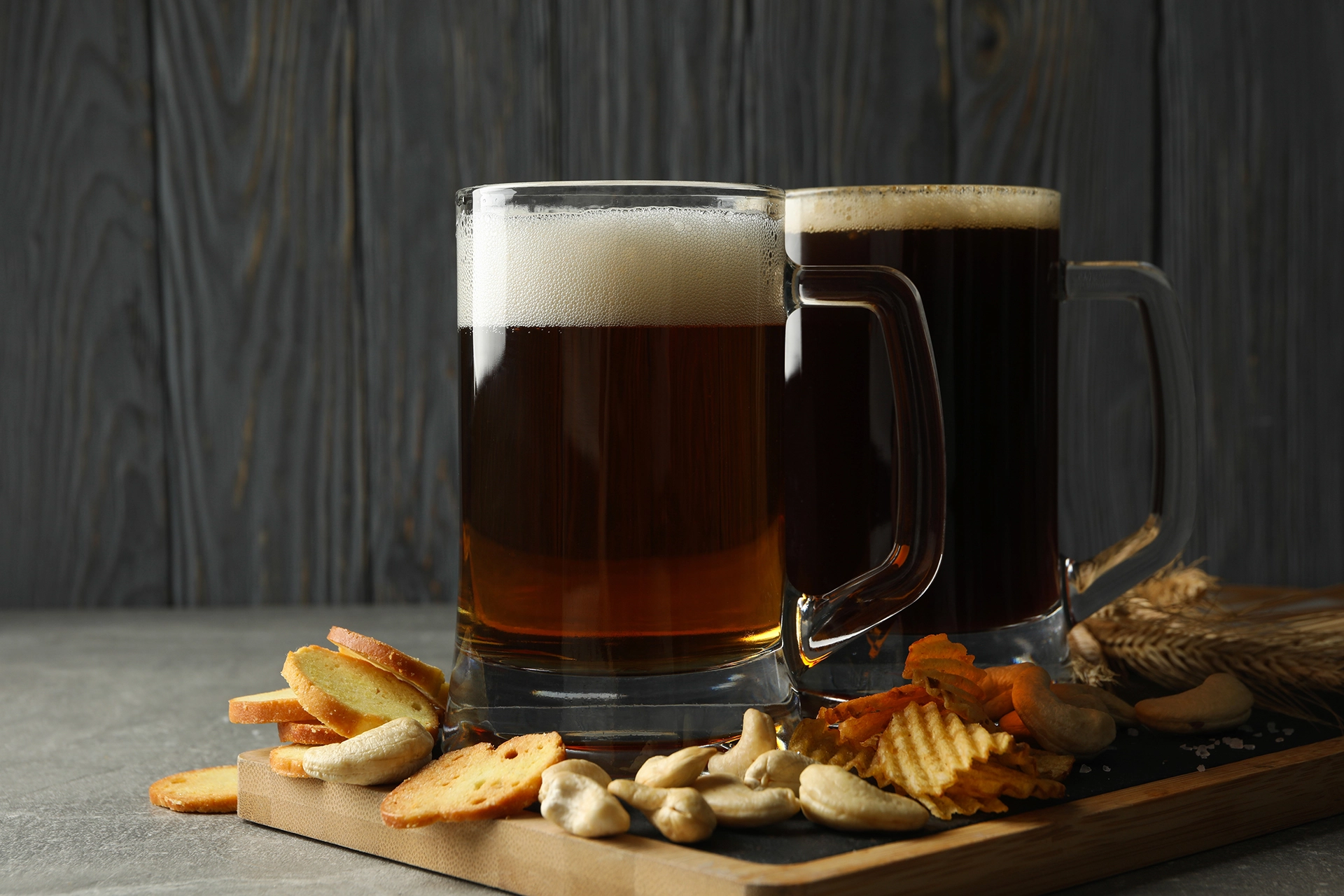
Porters usually appear in dark brown shades, sometimes with reddish hints, and are opaque. The head can range from off-white to a light bronze tone.
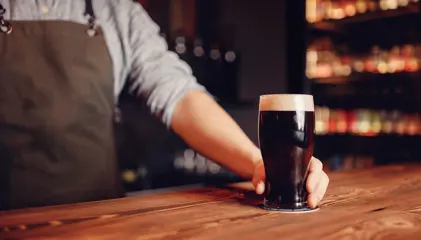
Stouts tend to be slightly darker, from dark brown to black. The head can vary from bronze tones to dark brown, depending on the variety within the Stout style.
IMAGEM
Aroma
Both styles have little to no noticeable hop aroma. The roasted malt is the dominant scent, with possible notes of caramel, chocolate, or cocoa. Depending on the interpretation, coffee notes may also be present.
Flavor
In Porters, you can perceive chocolate or, in a more bitter form, cocoa, with a subtle roasted finish. Hints of caramel or even coffee may appear. Some versions show the bitterness and flavor of hops—typically earthy or floral—but these are balanced by the malt, resulting in a moderately dry finish.
Stouts have a stronger roasted flavor, more pronounced than in Porters. Notes of coffee or dark chocolate are common. There is little to no hop flavor, although American Stouts tend to have more noticeable hop characteristics, often citrusy or resinous. The finish is dry.
Alcohol
Alcohol content varies across different varieties of each style. Although Stout Porter originated as a stronger, more alcoholic version of the Porter, some modern Porters can have higher alcohol than certain Stouts. Generally, however, Stouts are more alcoholic and full-bodied than Porters, ranging from 4% to 12% ABV, while Porters typically fall between 4% and 9.5% ABV.
IMAGEM
DID YOU KNOW...
Despite its name, the Baltic Porter is actually an interpretation of Porters—more specifically, of Imperial Stouts—by the Baltic countries. Unlike other Porters and Stouts, it isn’t an ale, but a lager.
Finding something that clearly distinguishes the two styles isn’t easy. After all, Stout originated as a variation of Porter, and despite some differences, the two styles have maintained a large number of similarities over the years.