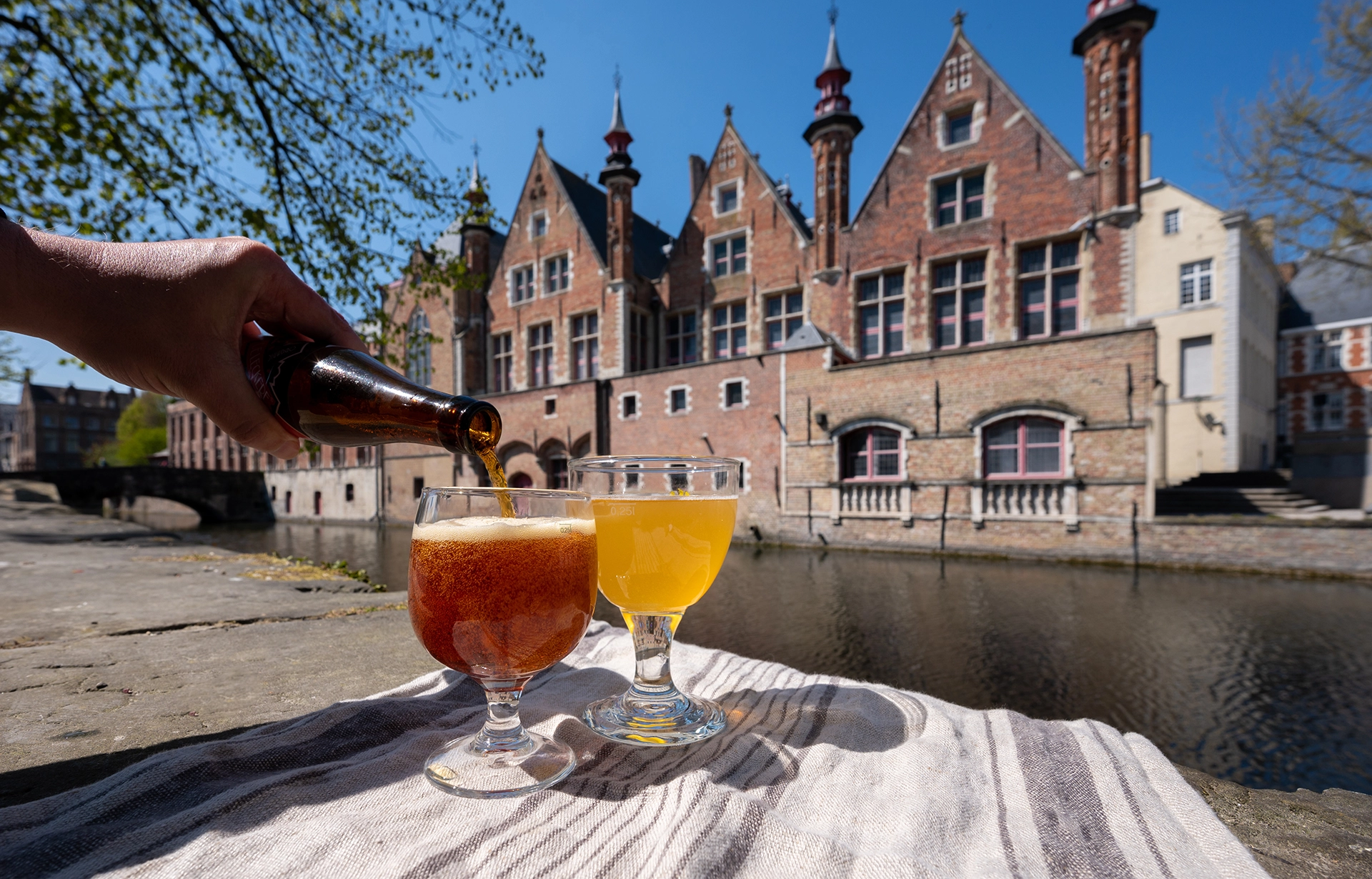
If there is one country we associate with beer, it is Belgium. In this small nation in the heart of Europe, hundreds of types of this beverage are produced, and according to the Brussels Tourism Department, Belgians drink an average of 80 liters of beer per year. This is a passion that began more than two thousand years ago and, in 2016, received recognition from UNESCO when the tradition of Belgian beer was elevated to Intangible Cultural Heritage of Humanity.
Before the Roman invasion
History records that the appearance of beer in the region that is now Belgium preceded the arrival of the Romans—even Emperor Julius Caesar was impressed by the amount of beer consumed in that territory. But this does not mean that the invaders did not have their share in the history of Belgian beer. The Belgians combined the knowledge brought from Rome about wine production with the Germanic know-how of brewing beer, which made Belgian beer unique in the world.
Turbulent period
It is also known that Belgian beer was initially brewed at home by women, who passed down the recipes orally. In the Middle Ages, production moved to abbeys and into the hands of monks, a domain that lasted until the end of the 18th century. From that point on, breweries went through turbulent times. During the French Revolution, many were destroyed, and the same happened during World War I. By the end of the conflict, of the more than three thousand existing breweries, only about 1,500 remained. The economic crisis of the 1930s and then World War II worsened the situation further.
Turnaround
In the late 1960s, a turnaround occurred. The special Belgian beer was rediscovered, and a decade later, British guru Michael Jackson put it on the world map, revitalizing the surrounding economy. Belgian beer, however, retained its unique characteristics. Indeed, an important aspect of beer history in Belgium is that, despite all the German influence, Belgians never followed the Reinheitsgebot, the law that in 1516 dictated that in Bavaria, beer could only be made from barley malt, water, and hops. Yeast, essential for fermentation, would later be discovered and incorporated into this law. Belgians continued to add herbs, spices, coffee, mustard, and even fruits to these ingredients.
From north to south
When we talk about Belgian beer, we must speak about the country’s regions. The beer made in the northern part, Flanders, is different from that made in the south, Wallonia. In the north, 60 percent of the country’s breweries are located today, including the giant AB InBEv, the largest beer conglomerate in the world. Beers from this region are ales with a fruity acidic taste, low carbonation, dark in color, and highly complex. It was like this in the past, and it remains so today.
In Wallonia, the southern region of Belgium, beer is different. We speak of pale ales (which later evolved into Saisons), produced by farmers from the early 17th century. They were brewed only in winter to prevent spoilage. Each farmer had their own recipe, but the most common ingredients were wheat, dark Vienna malt, rye, oats, floral hops, herbs, and spices.
Mixed Fermentation
In Flanders, even after the discovery of pasteurization, spontaneous fermentation was never abandoned, being combined with top fermentation through the introduction of yeast. Thus, mixed fermentation in wooden barrels was chosen. In this same region, wheat beers with lightly modified malts were also produced. Light in color, cloudy, and sweet, many were discontinued, but Hoegaarden, dating back to 1445, managed to survive to the present day. After its production underwent an interlude, Pierre Celis resumed brewing it in 1966. But it all started with the monks, who added orange peel and coriander to their recipe, a tradition that continues today.
Spontaneous Fermentation
Pajotteland, southwest of Brussels, is another important geographic point for Belgian beer. It was here that Lambic and Gueuze beers emerged, made through spontaneous fermentation, in which the beer is left to whatever comes into contact with it—be it residues from the previous beer, brewing utensils, or the air itself. Lambics have the particularity of being fermented by wild yeasts characteristic of this region and are produced only in spring and autumn; Gueuze results from blending aged Lambics with a younger batch, causing fermentation to restart.
From Glass to Gastronomy
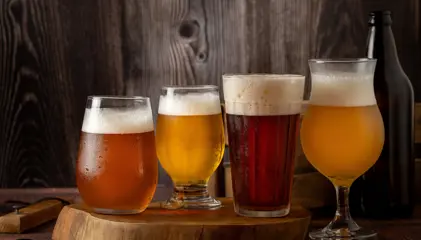
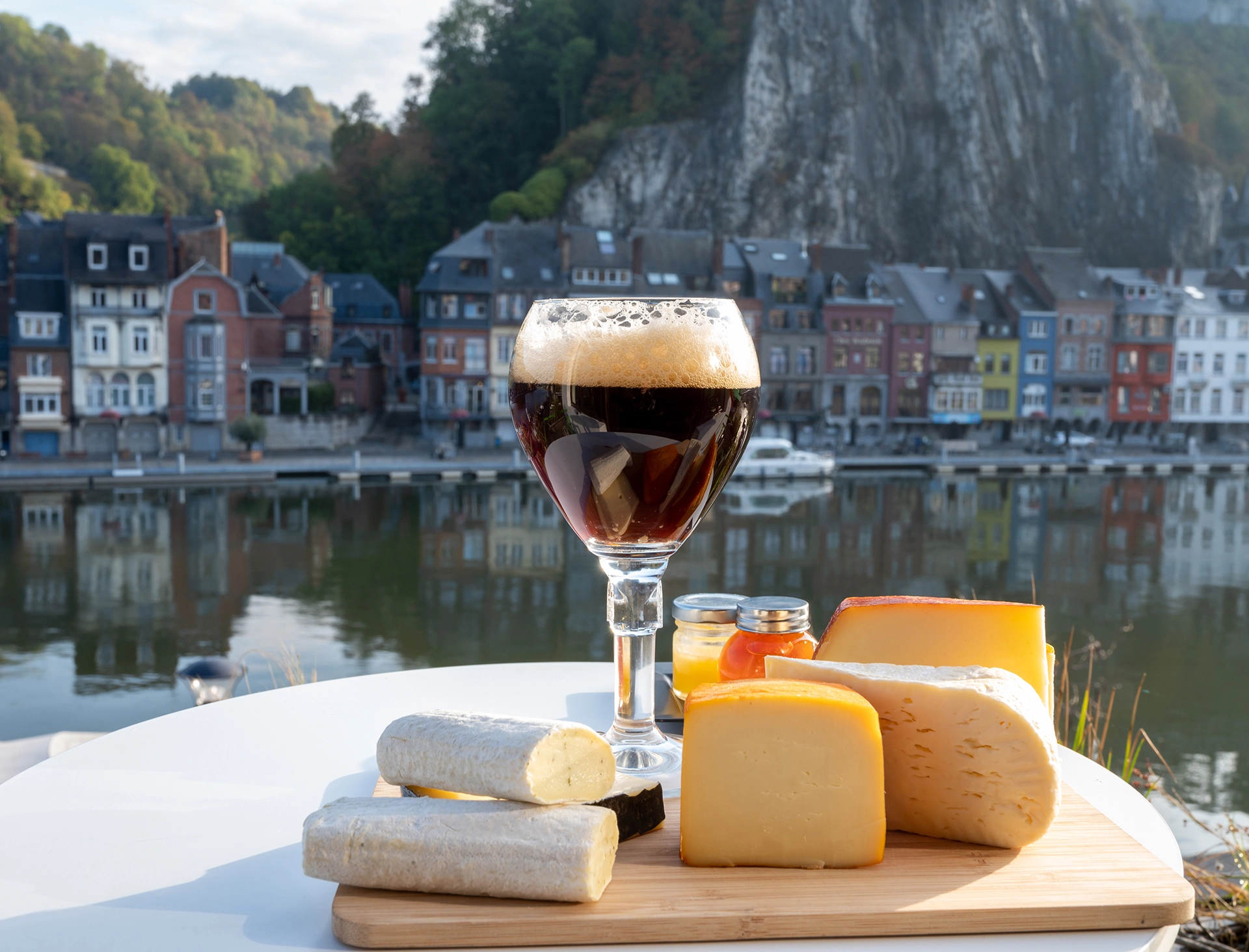
There are other curious aspects associated with modern Belgian beer. Belgians, both producers and consumers, consider the glass part of the beer-tasting experience. The right glass for the chosen beer type helps reveal aromas, flavors, and even better display the color. In Belgium, beer is also widely used in gastronomy and is recommended for pairing with gourmet meals. It is also an ideal companion for cheeses and chocolates.
TYPES OF BELGIAN BEER
The six most important types in the history of Belgian beer
Abbey Ale
Always brewed by monks, and one of the subtypes of this category, Trappists, still are today. They are strong top-fermented beers, often with a secondary fermentation in the bottle, which allows the flavor to develop over time. Examples include Dubbel, Tripel, and Quadrupel, which also fall under the Abbey category.
Flemish Sour
These are mixed fermentation beers with a complex, fruity flavor reminiscent of wine. They result from the combination of Saccharomyces cerevisiae yeast and a cocktail of spontaneous yeasts and bacteria. They age in oak barrels.
Golden Strong
This category is exemplified by the brand Duvel, whose flavor showcases Belgian yeasts, with notes of fruit and spices.
Lambic
Similar to wine because they result from spontaneous fermentation, Lambics are influenced by a special microbiome in the surroundings of Brussels, in Pajottenland. They typically age in wooden barrels, sometimes with fruits such as cherries or raspberries. Blending Lambics of different ages produces Gueuze, which continues aging in the bottle.
Saison
Originally brewed only in winter by farmers in Wallonia and given for consumption in summer to seasonal farm workers (hence the name). Initially light in color, these beers had low alcohol content and high carbonation.
Witbier
A cloudy beer made from barley and wheat, created by the Hoegaarden monks and revitalized by Pierre Celis in 1966. Its sour flavor is complemented by orange peel and coriander.