
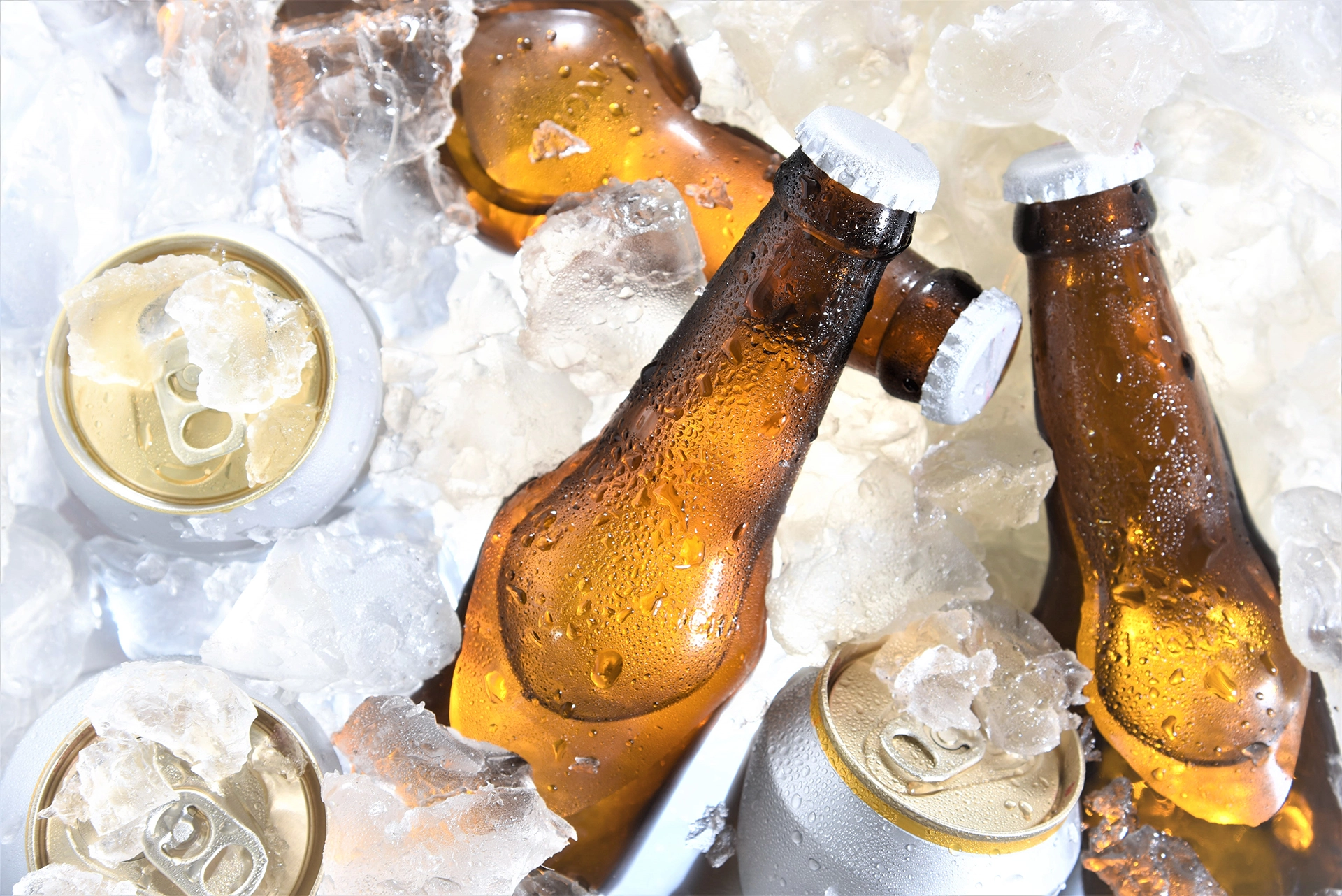
Does beer taste different when drunk from a glass, a can, or a bottle? It’s an age-old question that has long intrigued true beer lovers. While most agree that a glass offers the richest drinking experience—allowing for a better view of the beer and a clearer perception of its aromas—the debate between bottle and can remains open. But does beer really taste different depending on whether it comes from a can or a bottle?
There’s no definitive answer, but a few clues help shed light on the matter. One example comes from a blind tasting conducted in 2012 by The Huffington Post, which compared four beers in both can and bottle formats. In three out of the four cases, participants preferred the canned version. Moreover, only 54% correctly identified whether the beer they drank came from a can, suggesting it’s not that easy to tell them apart after all.
But taste isn’t the only factor in this debate. What’s also at stake is how well each container preserves the beer’s qualities—and in this regard, both cans and bottles have their own strengths. To understand the differences, we need to look back in time at the origins of each.
The Bottle: Successor to the Barrel
Today, bottles seem commonplace, but they only began gaining popularity in the late 19th century. The growing glass industry made bottled beer more accessible, allowing breweries to distribute their products across regions and even abroad. Before that, beer was mostly served from barrels—a challenge for home consumption, which meant most people enjoyed beer in public houses and taverns.
However, bottles have a powerful enemy: sunlight. Ultraviolet rays trigger a photochemical reaction with hops, negatively affecting the beer’s flavor. This reaction is more likely in clear or transparent bottles—so much so that a trained taster can detect flavor changes after just 30 seconds of light exposure. That’s why most bottles are brown, the best color for blocking light and slowing the reaction. During World War II, however, a shortage of brown glass led to the rise of green bottles.
Pros: Pleasant way to enjoy beer Cons: More exposure to light if improperly stored
The Can: The Queen of Preservation
The first canned beer was sold in the United States shortly after the end of Prohibition in 1933 by the Gottfried Krueger Brewing Company of Newark, New Jersey. The cans were produced by the American Can Company, which had started experimenting as early as 1909. The idea was initially abandoned due to technical issues—mainly a metallic taste caused by a lack of internal coating. By 1921, those problems were solved, but it wasn’t until Prohibition ended that canned beer could hit the market. The first batch was tested in Richmond, Virginia, and cans quickly became popular among brewers. By 1969, canned beer sales had surpassed bottled beer.
DID YOU KNOW...
The first canned beer sold outside the U.S. was in Wales. On December 3, 1935, Felinfoel Brewery Company made history by introducing the format to the British market.
In the early days, canned beers suffered from oxidation and metallic flavors, but that’s no longer the case. Cans now offer even better protection than bottles against light, since they are completely opaque—helping preserve beer’s freshness for longer. Despite being unfairly associated with cheap, low-quality beer due to mass production, modern canned beers can be just as good—or even better—than bottled ones.
Pros: Excellent preservation of beer’s properties Cons: Outdated (and unfounded) reputation for lower quality