If it were a painting, it would be the Mona Lisa: simple and enigmatic; if it were a sculpture, it would be David: beautiful and stripped of ornamentation; if it were a movie, Casablanca: classic and nostalgic. And if it were a song, the Pilsner would be Queen’s Bohemian Rhapsody: harmonious, bohemian, and perfect.
Alongside these four works of art, the Pilsner does not stand out. It is the most recognized and consumed beer in the world and shows no signs of relinquishing its impressive throne as queen of beers. In the Pilsner, everything is balanced and well-structured: body, sweetness, bitterness, and acidity. The quintessential representative of Bohemian-Prussian brewing excellence and mastery, the Pilsner is still relatively young: around 180 years old, which is almost nothing in the beer calendar. The truth, however, is that its emergence changed the history of beer. In this article, discover the origins of this style, its variations, and how it all started with a beer spill. We’ll tell you why in the next lines.
History
In 1838, the inhabitants of Pilsen, in present-day Czech Republic, poured liters and liters of beer into the streets of the city. The reason? Years and years of poor-quality beer, probably the result of contamination from the top-fermenting yeasts used at the time. With no quality beer to offer their citizens, the city’s political leaders and businessmen invited the Bavarian master brewer Josef Groll to produce a beer from scratch, combining the innovations emerging in countries like Prussia and England with local traditions.
If expectations were already high, they rose even more when Groll was provided with a brewery to experiment, innovate, and produce high-quality beer. Using lighter malts, thanks to English technological advances, local Saaz hops, a variety of the new bottom-fermenting yeast—lager—and the soft water of Plzen, Groll launched the world’s first Pale Lager, Pilsner Urquell, in October 1842. Unknowingly, the German master created a style that would be adored worldwide, regularly imitated by beer brands, and that became a symbol of brewing innovation and tradition in Central European countries.
But the story doesn’t end here. In 1845, Josef Groll returned home, taking the recipe for his beer with him. Light, clear, and with a white, creamy, and lasting foam, the Pilsner achieved immediate success in (then) Prussia, in 1870. And although it was still the 19th century, the novelty quickly spread throughout the Austro-Hungarian Empire and France, countries where the beer flowed eagerly down throats.
Based on the original Czech version, the German Pilsner adapted to the resources of that country: water with a high mineral content and different types of hops. And although it was already a sales success, it became truly popular after World War II.
Ingredients
Each country or region has its own version of the Pilsner. However, all share the same basic structure: lager yeast, malt, hops, and water, which create clean flavors, a balanced body, and a crisp finish.
Among the many Pilsners, the Czech and German versions stand out. The Czech Pilsner has a refreshing taste, with a complex maltiness and bitterness derived from Saaz hops. This hop profile ranges from low to medium and is quite prominent in the aroma, with floral notes. It is also the Saaz hops that add a certain characteristic spicy tone to the flavor of this beer. Czech Pilsners are even more malt-forward than German ones, with notes of biscuit, cookie, and bread.
The German version of the Pilsner uses hops from Germany—German Hallertauer or Tettnanger—this being one of the differences between the two beers. The hops give the German Pils, as it is also known, a more pronounced bitterness. Unlike the Czech Pilsner, German Pils drinkers may find citrus and honey flavors in this style.
In the glass
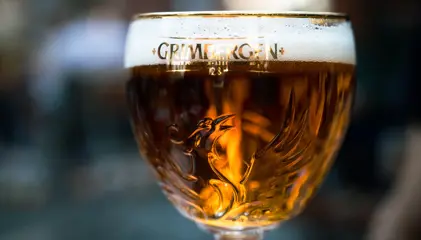
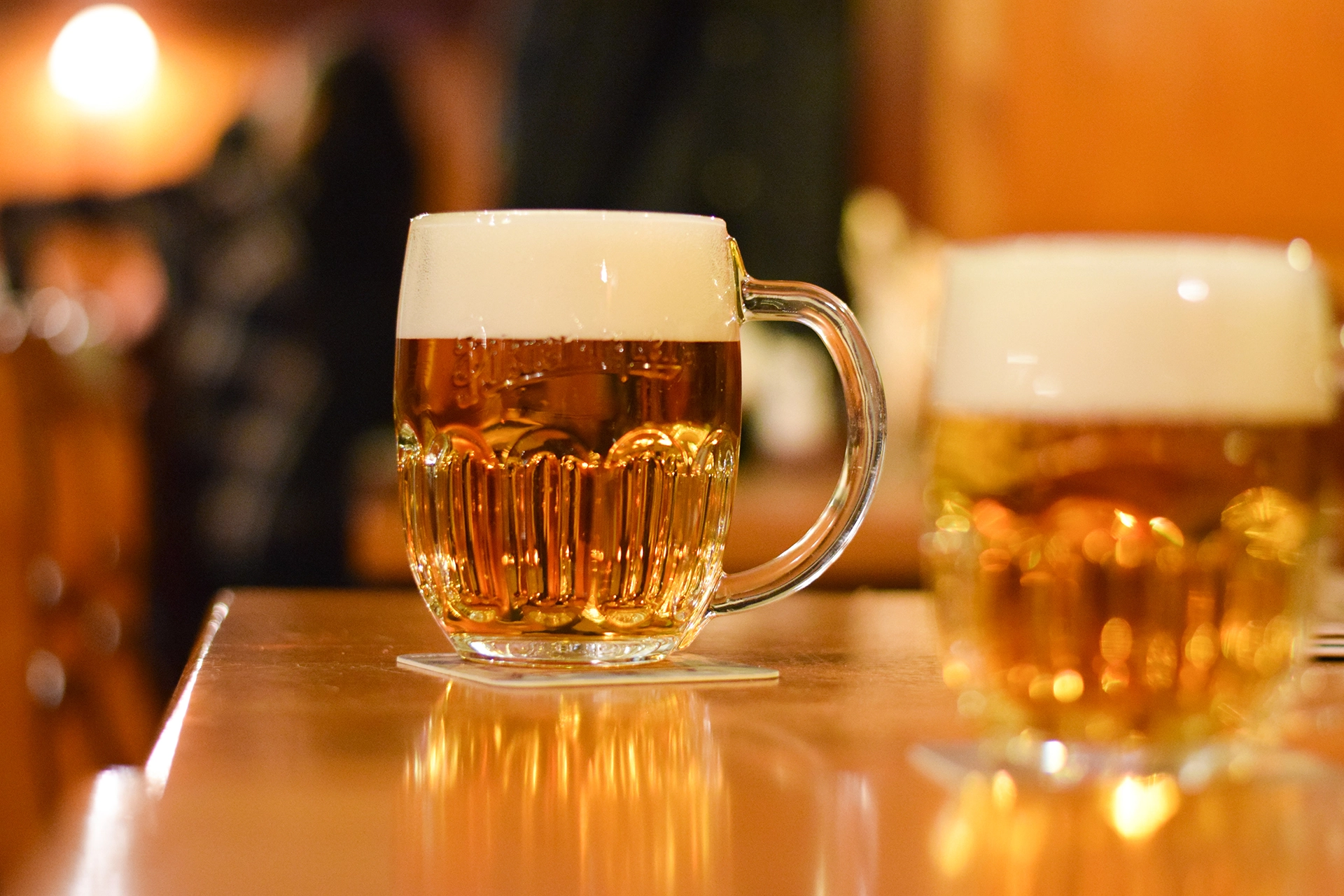
The Czech Pilsner has a strong golden color. It is a clear, bright beer with pure, white, creamy, and long-lasting foam. It is worth noting that the success of the Pilsner coincided with the boom in the production of low-cost glassware, including glasses. In this way, the visual impact of the Pilsner in the glass also contributed to the style’s success in Europe.
The German Pilsner is a clean and crystalline beer, with a pale yellow to light golden hue and a white, creamy, long-lasting foam. Some versions may be unfiltered, giving it a hazy appearance.
Aroma and Flavor
On the nose, the malt notes of the Czech Pilsner highlight bread. Its profile is spiced with hints of floral or herbal notes, although the balance between malt and hops can vary. On the palate, a malty bread flavor is accompanied by bitterness and a slightly spicy, floral taste. Both malt and hop notes are noticeable, with the malt potentially showing a slight caramel impression. With less carbonation than its German counterpart, the finish is long and rounded.
The German Pilsner presents a floral hop aroma, along with rich and sweet malt aromas. The carbonation is higher than in the Czech Pilsner, giving it a drier and lighter mouthfeel. The bitterness is persistent, culminating in a dry to medium-dry, fresh finish.
Alcohol
Pilsner is a light and refreshing beer. The alcohol content can range from 4.2% to 5.8% for the Czech Pilsner and 4.4% to 5.2% for the German Pilsner.
Pairing
Being such similar beers, both Pilsners pair well with grilled chicken, seafood, or salads. The slight acidity of the Pilsner is refreshing and cleanses grilled flavors, while the salad and herbs enhance the hops present in the beer.