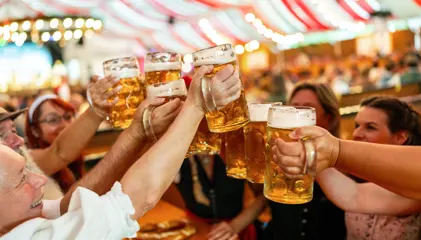
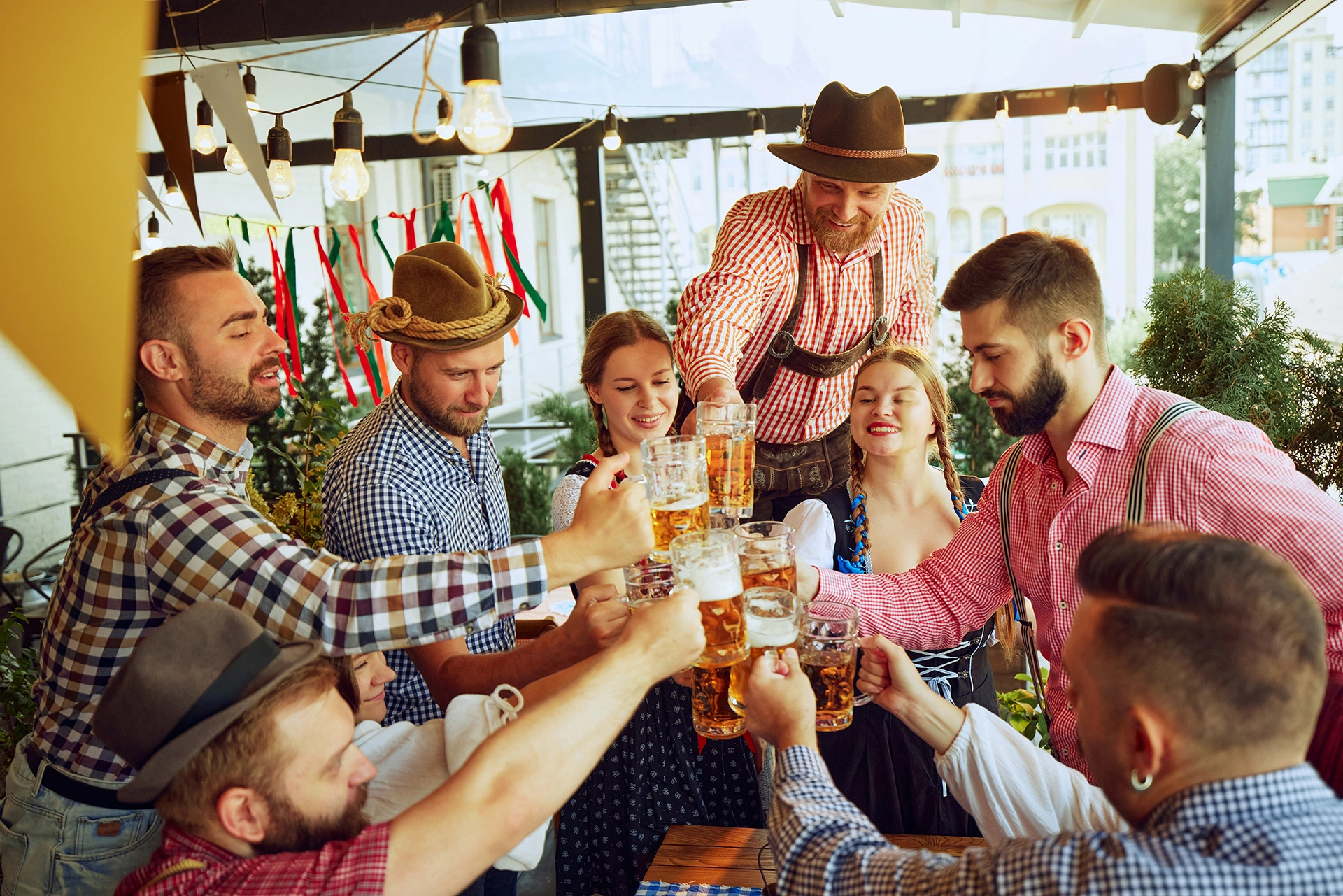
Whether it’s on a sunny terrace, at the beach, or during a summer festival, there’s always a good time and place to enjoy a cold beer. But to truly take the experience to the next level, there’s only one destination: the event where beer reigns supreme. So, let’s pack our bags and head to southern Germany, to the heart of Bavaria. One European city, 16 days, 6 million visitors, and about 7.5 million liters of beer — enough to fill three Olympic-sized swimming pools. It might sound like beer heaven, but it’s very real: these were the staggering figures of Oktoberfest 2018.
Once a year, all roads lead to Munich. Despite its name, Oktoberfest actually begins in September and stands as the world’s largest beer festival — a cultural icon and a highlight of German tourism. With over two centuries of history, the event celebrates traditional Bavarian beer in all its glory. Only local breweries are allowed to participate, and beer takes center stage amid hearty food, lively music, and a contagious festive spirit — an unforgettable experience for any beer lover.
A Royal Beginning
As the king of beer festivals, Oktoberfest’s origins were almost prophetic. In October 1810, Prince Ludwig — who would later become King Ludwig I of Bavaria — married Princess Therese of Saxony-Hildburghausen in a grand celebration that brought the entire city of Munich together. The event featured horse races and public festivities that captivated everyone.
The occasion was so memorable that, the following year, the city decided to celebrate it again — this time adding an agricultural fair to promote local farming. The festival grew quickly in scale and significance. In 1813, however, the Napoleonic Wars caused the first interruption of the celebrations — one of only 24 pauses in Oktoberfest’s history, mostly due to wars or epidemics such as cholera.
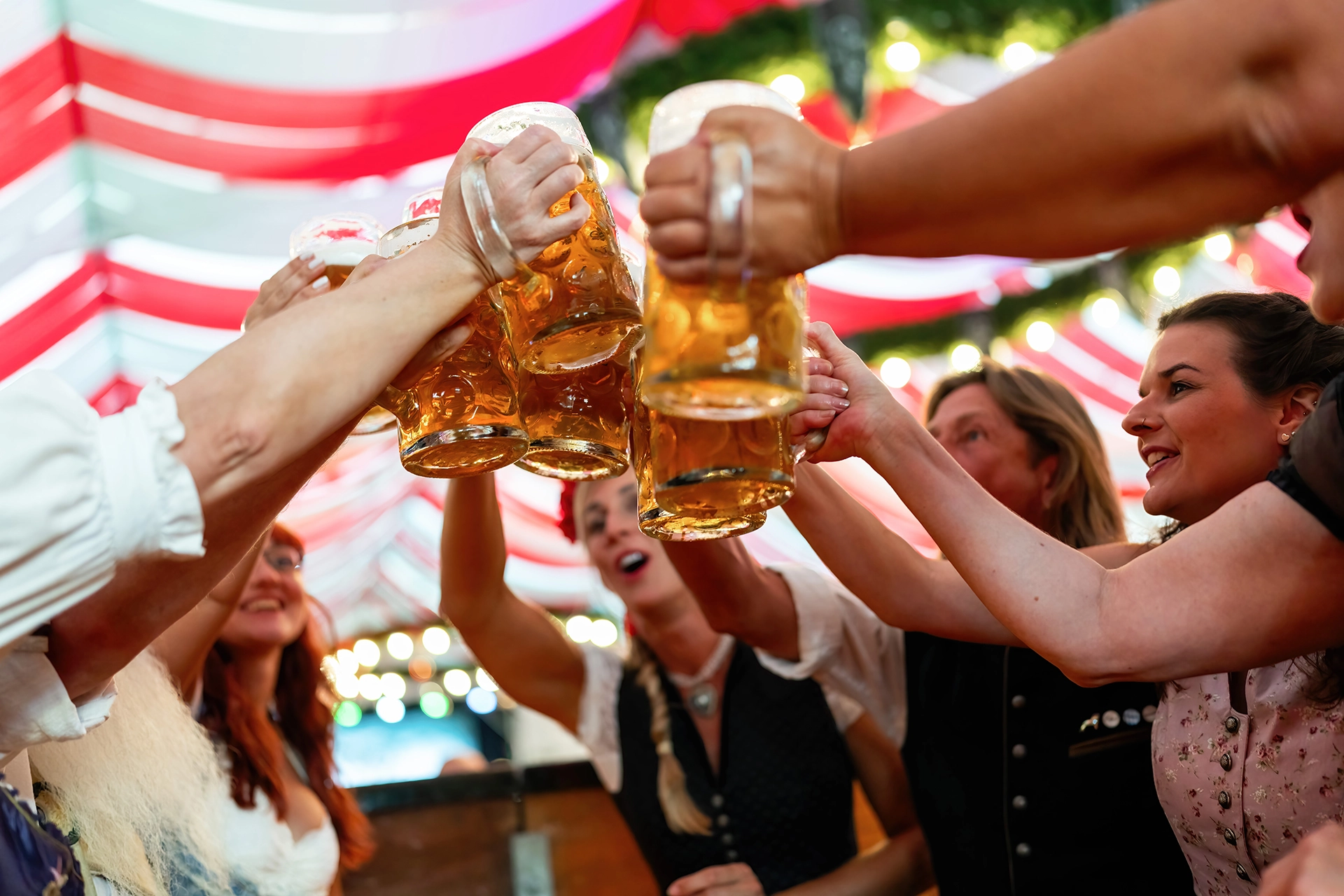
Beer and the Month of September
Bavaria quickly recognized the potential of the original celebration. By 1818, the festival had expanded to include carousels, swings, and beer stalls. Alongside these attractions and the already popular horse races — which would later be discontinued — the festival also featured food contests, sack races, and other folk competitions, helping it gain iconic status.
Oktoberfest became such a strong regional tradition that, starting in 1819, the people of Munich took responsibility for organizing it annually. Despite the festival carrying “October” in its name, it was first held in September to take advantage of the pleasant late-summer weather, and its duration was extended to two weeks.
Centenary Celebration = 120,000 Liters of Beer
The first brewer’s parade took place in 1887, complete with horses pulling beer barrels and musicians entertaining the crowd. Visitors enjoyed the beer, highlighting its central role in Oktoberfest. Today, this parade remains one of the festival’s signature attractions, with breweries preparing floats, themed costumes, and performances reminiscent of a “Beer Carnival.”
By 1896, large beer tents replaced the small stalls, with breweries investing more heavily in the festival. The importance of beer was clear: by 1910, a century after the first Oktoberfest, roughly 1.2 million liters of beer had been consumed.
For Everyone, All Around the World
Horse races ended in 1960, and many of the traditional competitions were gradually removed. Oktoberfest increasingly became the ultimate destination for beer lovers, and its growth has been remarkable. In 2018, the festival drew 6.3 million visitors, averaging about 394,000 per day, with the majority of international guests coming from the United States, the United Kingdom, and Austria.
While beer is certainly the main attraction for adults, Oktoberfest is family-friendly. Family Tuesday dedicates space to children in the Familienplatzl, featuring roller coasters and other rides.
Although Munich hosts the largest Oktoberfest worldwide, the festival has inspired replicas in at least 19 countries — some, like the U.S., Brazil, and China, even feature multiple participating cities. Within Germany, other cities such as Stuttgart and Hanover also celebrate their own versions.
Oktoberfest in Numbers
5,500 m² – Size of the largest tent in Oktoberfest history (1913), seating 12,000 people.
7.1 million visitors – Record attendance, set in 1985.
7.6 million liters of beer – Record beer consumption, set in 2011.
Fun Facts
In 1901, the festival tents were illuminated with artificial lighting for the first time, with the help of Albert Einstein.
In 1938, the Nazi Party renamed the event the “People’s Festival of the German Empire.”
From 1939 to 1948, Oktoberfest was not held due to World War II, marking the longest break in its history.
Visitors can be banned for misbehavior; one famous case involved Paris Hilton in 2006.
Aside from beer, there is a wine tent serving champagne and sparkling wine.
DISCOVER WHERE BEER LIVES
VISIT SUPER BOCK CASA DA CERVEJA
Book a Visit